

Meeting recap & overview
You built the movement. We built the machinery.
Rippel has spent a decade naming the vital conditions and gathering the partners who act on them — 345 organizations in close coaching relationships, thousands of people, a learning network that spans the country. The hard part is what comes next: giving every one of those partners something their community can actually do this week, and being able to show what moved ninety days later. That is the layer we brought to the conversation.
The Force for Health® Network runs a health-literacy and engagement platform — standards-aligned enrichment challenges, games, and community campaigns — paired with a place-based measurement instrument we call the PHIT Score, the composite produced by PHIT™, our Population Health Intelligence Tracker. It reads published federal and state data for a county, scores it across six domains, and tracks what changes as people there actually engage. Not another dashboard — a closed loop: measure the place, activate the people, re-measure the place.
Becky — the two you asked us to lift up
In your introduction you said there were elements of our hub worth going into with Bobby, and you named two of them. Here is where each one stands, and where we think the synergy actually is.
The civic tab in the PHIT Scorecard
Civic engagement, civic power, civic organizations and civic activations, scored alongside the
health measures rather than in a separate report. It exists because belonging and civic muscle sit
at the centre of your wheel — and because a place-based score that cannot see civic life is
measuring the wrong half of a community. This is the closest structural overlap between what you
have named and what we have already built.
Open the Scorecard ↗
Advance the Dream Community Scorecard
Eight pillars, scored 0–100 at county level, built with and for a community rather than about it. It is the working example of a community-owned scorecard in our system — and the nearest thing we have to what a Rippel-community scorecard would look like. Open it ↗
You also offered to share Rippel's dynamic modeling and the Well-Being Portfolio work, and said Bobby is the person to learn both from. We would take you up on that. The Ripple Simulator above is built on your published PLOS One coefficients precisely because we would rather extend your model than invent a competing one — and the Well-Being Portfolio definitions are what a co-built Academy would be organized around.
If there is interest for you to take our knowledge and build something for the masses, we would love to see that!— Becky Payne, President & CEO, The Rippel Foundation
That sentence is why this page exists. There is interest. Everything above is our attempt to show you what “something for the masses” could actually look like — measured, reproducible, and built so a resident, a partner and a funder are all looking at the same scoreboard.
Understanding your Commitments for the Coming Decade
Before proposing anything we wanted to show that we have actually read the work — the four interconnected commitments Rippel has set for the next ten years, and the Well-Being Portfolio primer Bobby sent ahead of the call. Below is each commitment in your language, with what we would carry underneath it. We are not proposing a new framework. We are proposing to be the machinery under yours.
And the primer Bobby sent — the Well-Being Portfolio
Fifteen elements: seven vital conditions, seven urgent services, and belonging and civic muscle at the centre. Two ideas in that document do more work than the wheel itself, and they are the two we built toward.
- Basic needs for health and safety
- Lifelong learning
- Meaningful work and wealth
- Humane housing
- Thriving natural world
- Reliable transportation
- Acute care for illness or injury
- Addiction treatment
- Crime response
- Homeless services
- Environmental clean-up
- Unemployment and food assistance
Arts and culture, social support, freedom from stigma, civic agency and engagement, collective efficacy, transparency. Not a seventh item on a list — the capacity that makes the rest possible.
The portfolio imperative
“All regions, including yours, already have a portfolio of interventions in play — whether acknowledged or not.” That line is the reason PHIT™ exists. A region cannot negotiate a portfolio it cannot see. Our first job in any community is to make the portfolio it already has visible, priced and scored, before anyone argues about changing it.
Negotiating priorities
“Even if stakeholders agree on common ends, they may disagree — sometimes forcefully — about the best means.” That negotiation currently happens at a retreat, with sticky notes, once. The same exercise against a live scoreboard can happen quarterly, with every stakeholder seeing the same numbers and the same trade-offs.
On using your material. We have read the terms on the Well-Being Portfolio definitions — educational use, copyright notice intact, link to the work on your site rather than reproduce it, no editing, and not for monetary purposes. Nothing on this page reproduces or alters that document; the element names above are your published taxonomy, credited to you, and we link to the source rather than host it. For anything beyond educational use — a co-branded Academy organized around your definitions, for instance — we would come to you for written permission first and treat the licence as a precondition of the work rather than a detail to sort out afterwards. The Rippel Foundation ↗
Commitment names and the portfolio element names above are The Rippel Foundation's own, from Our Commitments for the Coming Decade and Definitions of the Well-Being Portfolio (ReThink Health, a Rippel initiative, © 2023 The Rippel Foundation, all rights reserved), cited with attribution to show alignment. The Vital Conditions for Health and Well-Being framework is © The Rippel Foundation / ReThink Health.
What we actually are
Our six divisions
Not a dashboard vendor and not a content shop. The Force for Health® Network is six divisions turning around one Command Center — measurement feeds the Academy, the Academy feeds the games, the games feed the media, the media brings people back to the measurement, and the Command Center pulls all six into one place. Most organizations buy these one at a time from four vendors and then spend years trying to make them talk. The notes below say what each one would do for Rippel, and two of them open straight onto the live division pages.
Network Hub · Command Center
One Force. Six gears. One Hub. This is the same live widget that runs on our own network overview, not a picture of it.
Who owns and operates all of this
- My Healthy Globe, Inc. — a Delaware-based C Corporation, doing business as The Force for Health® Network. The six divisions and the Command Center above are owned and operated by this entity. Commercial agreements, licensing and paid pilots sit here.
- The Force for Health® Institute — our non-profit, research-focused organization, which we also lead. The Force for Health® Institute is a charitable project fiscally sponsored by Players Philanthropy Fund (PPF), a Texas nonprofit corporation recognized by the IRS as a tax-exempt public charity under Section 501(c)(3) of the Internal Revenue Code (Federal Tax ID 27-6601178). Contributions to the Force for Health® Institute and Foundation are tax-deductible to the fullest extent of the law.
Worth naming because it gives a Rippel partnership two doors rather than one: a commercial agreement with the Network, and a philanthropic or research path through the Institute for the parts of the work that belong on the charitable side.
Other partnerships already running
Advisors & partners
Rippel would not be our first partner of this kind, and the shapes are not all the same. Three that are live now — a co-hosted channel, an advisory relationship, and a full condition-specific hub — because a Rippel partnership would likely be all three at once.
Ready & Resilient NOW
Our preparedness and community-resilience channel, with its own leadership council, episode library and challenge track. This is structurally the closest thing to what a co-hosted TEAM Up · Greater Community Channel with Rippel would be — the format, the production cadence and the council governance already exist and are running.
Our Advisory Council
People who lend judgment and scrutiny rather than logos — and who ask the same hard questions about method that your team will.
Sickle Cell Foundation of Arizona · the 360 SCD Hub
A condition-specific organization with its own branded hub built on our stack — content library, community scorecard, episode series and a recurring Monthly Insights report that goes to their board and their funders. It is the working proof of the arc we described earlier: a partner organization with its own Academy, its own Command Center and its own data product, carrying their name rather than ours.
The Ripple Simulator
Your own PLOS One result says what the country gains over twenty-five years under the full federal plan. This takes those exact published coefficients down to one county and adds the one driver the model cannot see: whether anyone is actually doing anything. Every ripple is one real action — a module finished, a tracker logged, a kindness recorded. Click the water.

Your PLOS One paper says what the whole country could gain over twenty-five years. This takes those exact published coefficients down to a single county and adds the one driver the model cannot see — whether people there are actually doing anything. Each ripple is one real action: a lesson finished, a tracker logged, a post shared. The four sliders are the physics. Belonging is the multiplier — turn it up and everything else moves faster. It frames a pilot. It is not a prediction, and we would not present it as one.
(baseline 53.5%)
(baseline 4.0%)
Anchoring: scaled from ReThink Health's published result — PLOS One, April 2025: full implementation over 25 years raises thriving by 20 points (53.5% → 73.5%), cuts suffering by 2.5 points, adds 2.6 years of life expectancy, with no new appropriations. This is a projection that frames a pilot and a study. It is not a claim about what has happened.
The Community Scorecard
Eighteen counties where Rippel-affiliated partners are named in the 2023–25 Impact Report and the 2026 Intermediary Learning Report. Pick any one and watch the four underlying measures move. Every number is published CDC data — the source, the vintage, and the formula are printed below so anyone on your team can reproduce it.
This is Domain H — the community health baseline — four CDC measures scaled against the national distribution and averaged. Higher is healthier. It is one block of six in the full PHIT™ equation, roughly a fifth of the composite, and we label it as one block rather than dressing it up as the whole score. Nothing here is generated or modeled. Morris County, your own front door, sits near the top; several communities you serve run twenty and thirty points below it. That gap is the work.
Ranked across all eighteen. Click a bar to jump.
Source: CDC PLACES: Local Data for Better Health, County Data, dataset
swc5-untb, BRFSS year 2023, age-adjusted prevalence.
Method: each measure is scaled
S = clamp(100 × (1 − (local − best)/(worst − best)), 0, 100),
where best and worst are the 2.5th and 97.5th percentile of all 2,957 US
counties reporting that measure — derived from the distribution itself, not chosen by us.
The four are then averaged with equal weight, a choice we state rather than assume. The national
percentile shown alongside uses no scaling at all, so you can see how much of the score is the data and
how much is the scale. Connecticut is reported by planning region, per the 2022 federal change.
Open the scorecards yourself
The panel above is a slice. These are the full instruments, open in your browser, no account needed — including a view of the PHIT™ Scorecard prepared for Rippel.
The PHIT™ Scorecard
Pick any state and county in the country and generate a live digital CHNA from federal data
— including the civic tab Becky asked us to lift up. This is the production instrument with
our internal directories and member tools taken out, so you can share it freely inside Rippel.
Open the Rippel view ↗
Advance the Dream Community Scorecard
Eight pillars, scored 0–100 at county level — a community-owned scorecard built with a
community rather than about one. The nearest working model of what a Rippel-community scorecard
could look like.
Open it ↗
Our specialty scorecards — the condition- and population-specific builds — are not public yet. They are on the list to walk you through whenever it is useful.
What a resident actually holds
The measurement only means something if people move. This is the loop in a resident's hand — learn something, do something, pass it on. Each completed action is one drop in the pool you played with above.
Tap through the three steps. The coins are real — they accrue to a person, a team, a school, and a partner organization, and every one of them also adds to the network's shared total.
That is the mechanism behind the internal challenge: individual actions roll up to a team, teams roll up to a Rippel partner, and every partner rolls up to one collective ripple. Each partner's own movement is what the Scorecard re-measures at ninety days.
The Mixed Media Maker
The capability you told us you liked: point it at content Rippel already has — reports, recordings, past convenings, partner stories — and it pulls the usable pieces out automatically rather than someone doing it by hand for a week.
Quote & asset creation
Pull-quotes, key-point cards, short clips and social-ready graphics extracted from existing long-form material — in minutes, not weeks.
Social media distribution
Scheduled and pushed across channels, with each Rippel partner getting their own cut to post under their own name.
Gamified engagement
Every asset can carry a challenge, a badge or a coin, so a piece of content becomes something a resident does rather than something they scroll past.
A Command Center that arrives full
This is what makes the difference between a platform you have to fill and one that is already yours. We run Rippel's existing library through the Maker and pre-load your Command Center with it — your reports, your frameworks, your partner stories, already integrated with the scorecards and the Academy. Nobody logs in to an empty system.
The Mixed Media Maker, in practice New · Oct 5
We ran four things Rippel has already published through the Maker. It pulls the five to ten core messages out of each source and turns them into things people take, earn and share, without sitting through the full hour.
The same Maker, five programs on the way
None of these started as a game. Each began as a broadcast, a film, a book, a song or education content that a partner already had. All five are being readied for the inaugural season of Reality Health Games™ and are in final review and completion. Dr. Charles R. Drew is already live through our partner, the Sickle Cell Foundation of Arizona. We have not announced the full lineup yet, so please treat these as an early look.
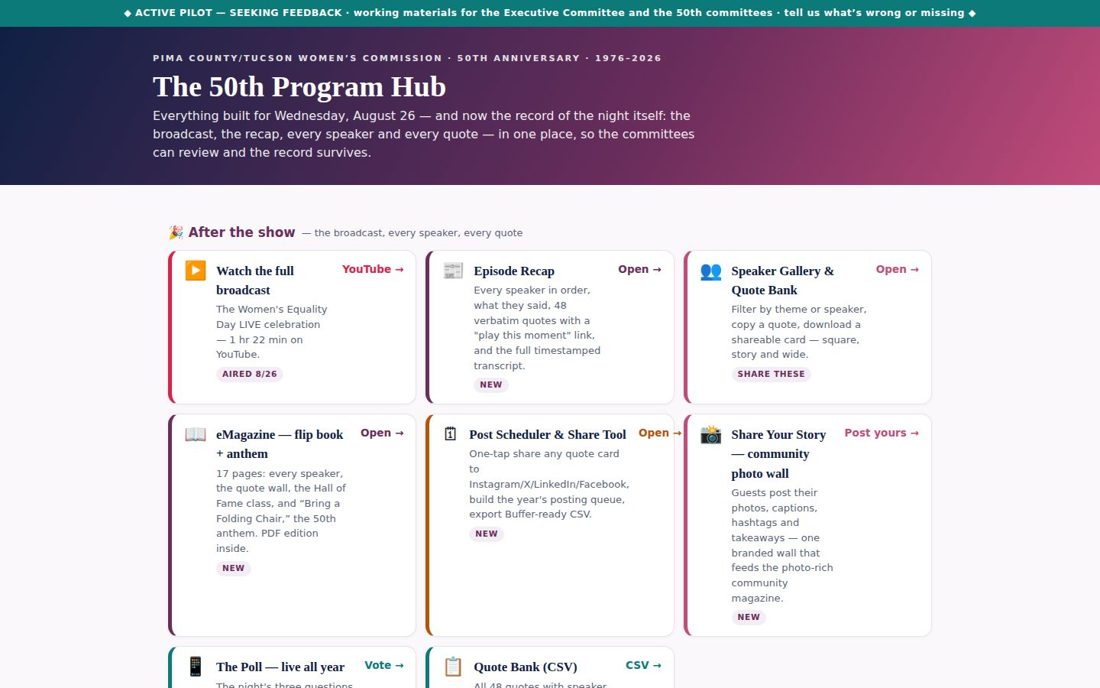
Women's Commission 50th Anniversary
With the Pima County/Tucson Women's Commission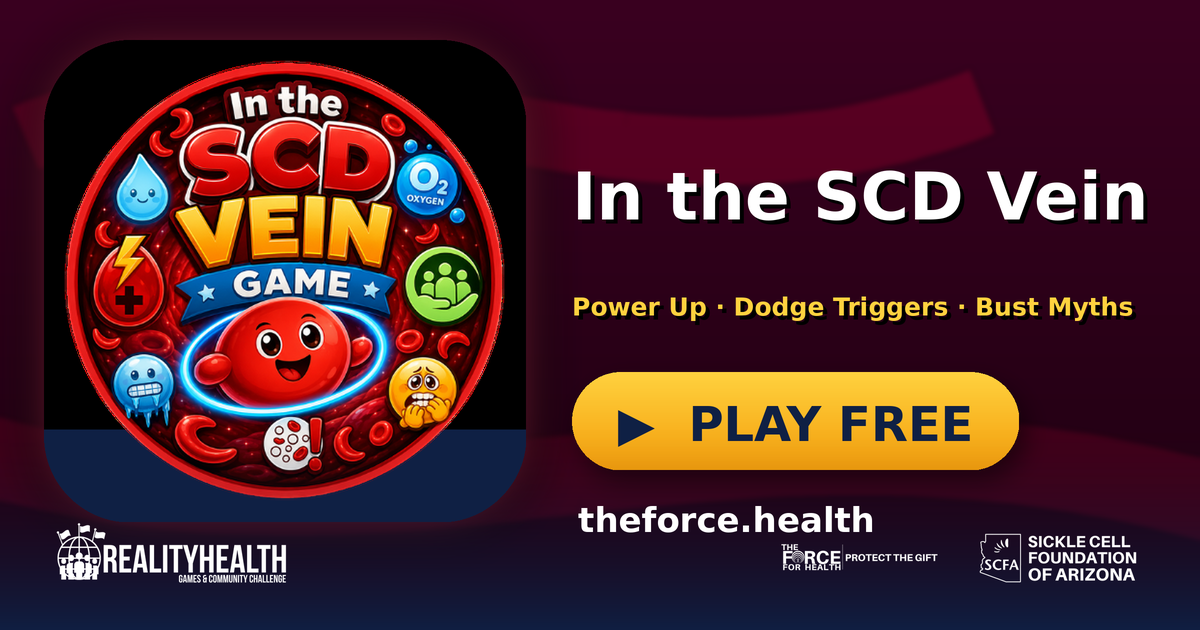
Sickle Cell Disease
With the Sickle Cell Foundation of Arizona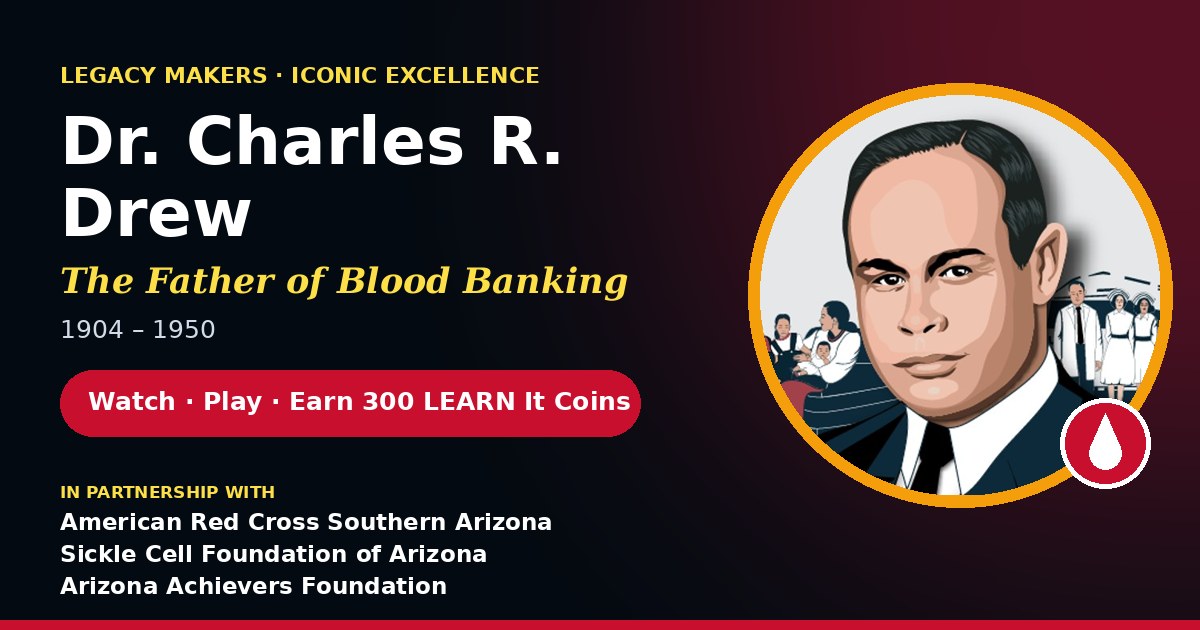
Dr. Charles R. Drew
With American Red Cross Southern Arizona, SCFA and the Arizona Achievers Foundation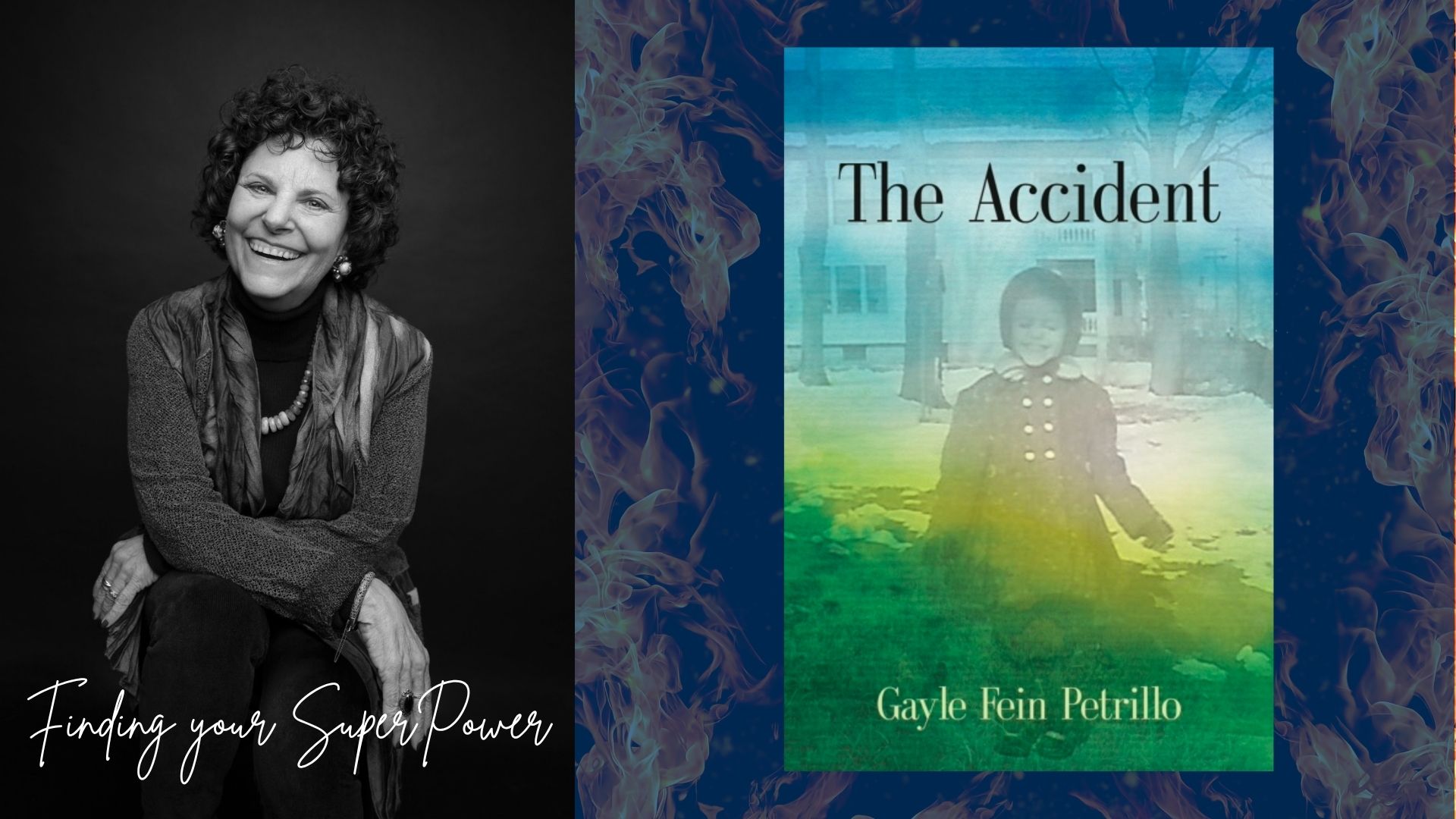
Burn Prevention & Awareness
With author Gayle Fein Petrillo, The Accident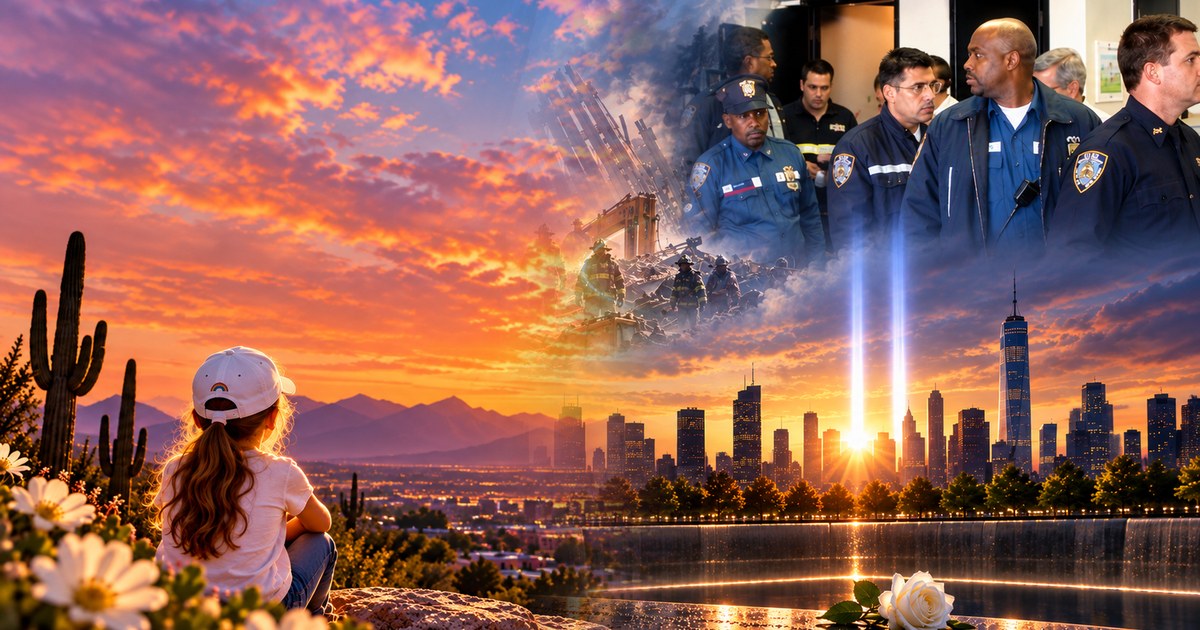
Honoring 9/11
Original songs from Coach Lucy and Dr. RobA song for Rippel: Greater Together New · Oct 7
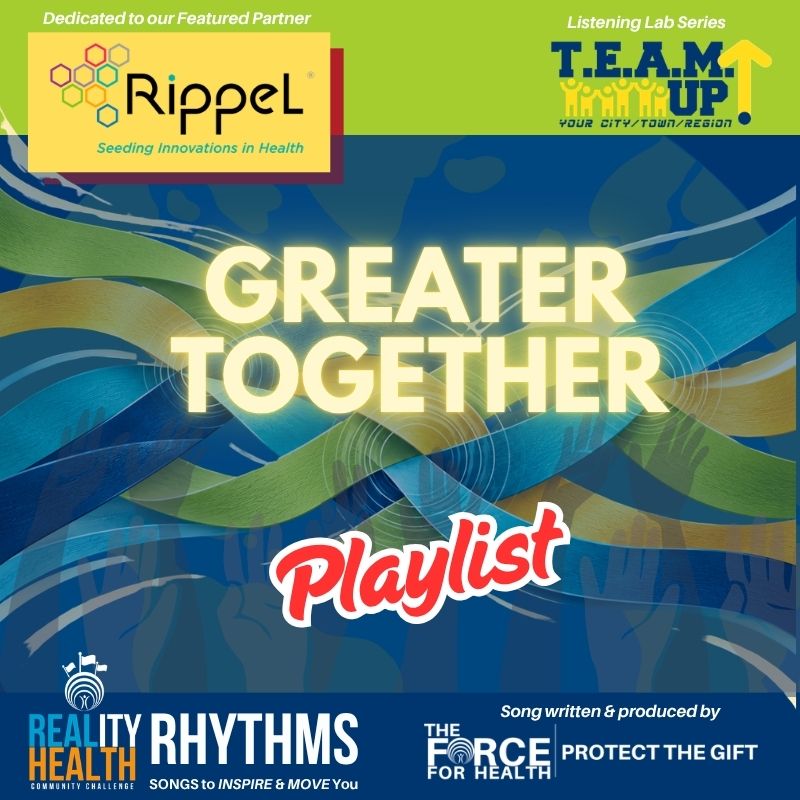
We wrote an original Reality Health Rhythms song in honor of Rippel and the stewards who create the conditions everyone needs to thrive, and produced it in eight genres. It is the first Listening Lab in our T.E.A.M. Up series dedicated to a featured partner.
Listeners can play any version or shuffle all eight, slow the tempo to learn it, and score their favorite in Game Mode. Like everything else here, it can open a gathering, a webinar or a Command Center.
Listen to Greater Together →Private for now, shared only through this deck. It opens without asking for the passcode again.What else is in the Command Center
Everything above runs in the open. Behind it we have been building a working Rippel Command Center — the place where all of this sits together for one partner. It is not finished and it is not something we would hand over half-built, so here is an honest look at what is in there rather than a login. Any of these four we would walk your team through live.
Side by side — where 1 + 1 = 3
Your frameworks and ours, laid against each other row by row: framework, portfolio design, data, simulation and games, stewards, learning — with a third column for what becomes possible only if both exist.
Vital conditions × our assets
Every asset we have built, sorted into your seven vital conditions, with the PHIT™ feed behind each one named. Where we are thin — housing, transport — it says so on the row rather than quietly leaving it out.
The Well-Being Portfolio Academy
A concept we would scope with you: your fifteen elements turned into four altitudes at once — a stewards' accelerator for the people holding the purse strings, a resident academy, a playable version of the portfolio exercise, and real-world challenges a class or a church can finish in a week.
Benchmark any community against any other
The scorecard above, but comparative: set any of your communities as the benchmark and every other reads as a distance from it. Sort, re-benchmark, and watch the gaps rather than the rankings.
Your active communities, scored today
The same eighteen counties, ranked. This is a baseline — the conditions in each place before anything we do, driven largely by income and demographics. It is not a scorecard on how Rippel's partners are performing, and county-level figures necessarily flatten real variation inside a place like Cook County. It is the starting line we would measure movement against.
| Partner / network | County | Domain H | Score | Nat’l %ile |
|---|
Same source, vintage and method as the Scorecard above. We show Domain H alone rather than a six-domain composite, because the remaining domains are still being wired to primary sources and we would rather hand you one figure you can defend than six you cannot.
Where the two frameworks meet
Basic needs for health & safety
Domain H reads it directly from CDC PLACES. Our Reliable Transportation and Real Cost modules activate against it.
Lifelong learning
Standards-aligned enrichment challenges, school and club cohorts, and the Academy's Learn It · Live It · Share It progression.
Meaningful work & wealth
Health-career pathway content — phlebotomy, lab tech, community health worker — built as pre-apprentice on-ramps.
Belonging & civic muscle
Team, family and community group structures with shared goals; participation itself is the measured signal.
Humane housing
Currently a measurement-only domain for us. Named here as a gap, not a claim.
Reliable transportation
A built, playable module already in the platform — the clearest example of a vital condition turned into something a resident can act on.
Your network, as a Chamber of Health
This is the structural idea underneath everything above, and the one we should have led with. Rippel already is a Chamber of Health. It is a convened network of organizations that have agreed on a shared frame and are working the same conditions in different places — which is precisely what our Chamber structure was built to hold. We would not be forming one for you. We would be giving the one you already have a floor to stand on.
The eighteen — and beyond
The communities named in your Impact Report and the 2026 ILN become the founding chamber. Each has its own directory, its own scorecard and its own channel, and each can see the others. Beyond them, the structure takes any partner who joins later without a rebuild — the eighteen are a starting roster, not a ceiling.
Sponsors and civic partners in one place
A Chamber is where the funders, employers, health systems, schools and civic organizations in a place are visible to each other and to the residents. For a partner trying to assemble a local coalition, that directory is often the missing piece — and it is the same layer that lets a sponsor see exactly what their money moved.
Chamber of Health® is one of our six divisions — see the gear diagram above, or open the division page ↗.
What we would pilot together
The partnership sits at the community channel level. We co-host TEAM Up · Greater Community Channels with Rippel — one channel per participating community, carrying that community's own challenge, its highlights, and its heroes. It runs inside the partner network Rippel already convenes — Rippel co-hosts, the partners supply the story, and we build and run the machinery underneath it.
The friendly competition
Not communities pitted against each other — an internal challenge inside Rippel's existing partner network. Each partner runs against its own baseline, everyone can see the standings, and every action anywhere adds to one shared total. It is a reason to stay committed and engaged between convenings, and a way for each partner to add visible value to the collective ripple.
The highlights
What is actually happening on the ground, produced as episodes a Rippel partner can use as their own — for their board, their funders, their volunteers.
The heroes
Named people. The coach, the nurse, the bus driver, the teenager who organized something. Recognition is the cheapest and most durable fuel a community has, and almost nobody budgets for it.
What runs on the channels
- A co-hosted Reality Health Games season — residents play, partner teams take part together, and the vital conditions become something people do rather than read about.
- A Rippel partner spotlight series — the partners you already convene, featured in a way that helps you further support them.
What we commit to
- Ten shows a year, co-hosted, with Rippel helping choose the communities, the partners, and the vital conditions each episode centers on.
- Full production — post-edit, packaging and distribution across the channels, plus a cut handed to each community and partner to use as their own.
- Tracking and monitoring per channel: reach, engagement, cohort sign-ups, team formation, and standings movement.
- Qualifying the ripple effect — each participating county gets a scorecard before and after, compared against matched peer counties with no channel, so what we report is a comparison rather than a claim.
Four options to consider
These are not sequential and they are not a roadmap we are asking you to sign up to. They are four distinct things we could do together, any one of which stands on its own. A pilot could start with one, or with two running alongside each other.
Co-hosted community channels
The channels, the seasons, the scorecards, and the first real before-and-after comparisons in participating communities. The most concrete place to start.
A custom Rippel Academy
Your frameworks and definitions turned into the Learn It · Live It · Share It progression, carrying your name, for your partner network to use. Subject to the licence conversation noted earlier.
A Rippel Command Center
One place where Rippel and its partners see every participating community, its scorecard, and what changed — pre-loaded with your own material rather than handed over empty.
A social venture partnership
The measurement layer and the engagement layer built and owned together rather than bought and sold. The shape we would most like to end up in, whenever it makes sense.
The ask
It would touch more of Rippel than the two of us
Looking at how your team is organised, a partnership of this shape does not sit in one department. As best we can tell from the outside, it lands in at least five:
So the most useful question we can ask is not what you think of this — it is who you would want in the room. Whoever would need to weigh in, push back, or own a piece of it. We would rather hear the hard questions from all five of those angles in one sitting than work through them one at a time over two months.
Becky — you said your guess was that Bobby and Rob would find time faster without you. You were right, and it was the right call. But this next one we would genuinely like you in the room for.
A working session with Becky, Bobby, and whoever from those teams you would want at the table — to scope a paid pilot, talk through the real and possible plays, and decide together whether this is worth doing.
What we would want to come out of that hour: which communities, which partners, which vital conditions each channel is built around, what a first season costs and covers, and a start date. We will bring live scorecards for whichever counties you want to look at, and we are happy to go as deep as your team wants on any of it — method, production, or terms.
We are asking for a paid pilot rather than a free trial on purpose. Ten produced shows, the community channels, and honest before-and-after measurement are real work, and a pilot that both sides have committed to is the only kind that tells you anything true. We would rather find out together whether this works than hand you a demo.
We came away from our last call more enthusiastic than we went in, and we would very much like to find the shape of this with you.
