A Force for Health® Framework

The Prepared Person
Getting Ready to Reemerge Into Society

A successful return home works like a successful hospital discharge. The people who do best are the ones who were prepared — they understood the plan, practiced the skills, and built a team around them before the doors opened.

"A prepared patient leaves the hospital knowing their diagnosis, their plan, their warning signs, and who to call. A prepared person leaves a facility the same way — ready not just to survive on the outside, but to thrive."
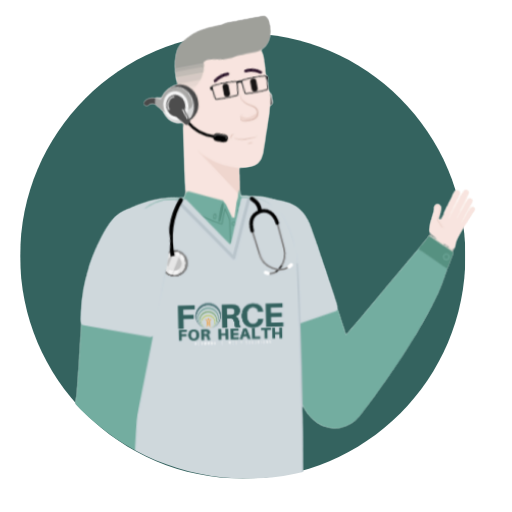
Dr. Rob
Dr. Rob · your host
"Welcome. Think of this like preparing for discharge: we work six life domains before the doors open. Check off each step, read the lessons, and watch your Readiness Ring fill as you earn coins. I am with you the whole way — tap the Clipboard if you get stuck."

The Core Idea

Reentry Is a Discharge Plan

Everything that makes a patient succeed after a serious hospital stay maps directly onto a successful return to the community. Same playbook, different setting.

In Healthcare
In Reentry
The episodeA hospital stay or treatment for a serious condition
The episodeTime served inside a facility
The transitionDischarge day — going home
The transitionRelease day — reentry into the community
The planThe discharge & treatment plan
The planThe reentry plan (housing, income, ID, support)
The teamPatient + family caregivers + clinical team
The teamThe person + family + reentry professionals
Follow-upFollow-up appointments & check-ins
Follow-upParole/probation, case manager, mentor check-ins
The setbackReadmission — ending up back in the hospital
The setbackRecidivism — ending up back inside
The goalRecovery and long-term wellness
The goalStability, belonging, and a thriving life
The Program

One Framework: Learn It · Live It · Share It

Just like every Force for Health journey, preparation moves through three phases. Each of the three people in this story works the same three pillars from their own role.

📘
Phase 1

Learn It

Understand the situation honestly — the plan, what to expect, the early warning signs of trouble, and who is on the team. Knowledge replaces fear with a map.

💪
Phase 2

Live It

Practice the skills and build the daily habits before they're needed — managing money, time, stress, relationships, and health one routine at a time.

Before The Doors Open

Pre-Release Readiness Curriculum

You don't start preparing on release day — you start now. A patient does the learning and physical therapy before discharge. Work these six domains while still inside, with FFH lessons to learn it and trackers to live it. Your progress is saved automatically.

♿ Make it easier to read
Text size:
🔊 Open any lesson and tap  Listen  to hear it read aloud.
0%Ready
Just Starting
Check off what you've completed. Each step earns coins and moves you toward Release Ready.
coins
0coins earned
0 / 0steps complete
📘
0 / 0lessons read
Three Tracks, One Team

Choose Your Role

A discharge only works when everyone knows their part. Pick the track that fits you — each one mirrors the others so the whole team stays in sync.

The Person · "The Patient"

You Are the Patient in This Story

You are the one being discharged. The best outcomes belong to people who took ownership of their plan before release — who knew their goals, practiced their skills, and weren't afraid to ask for help.

📘
Learn ItKnow Your Plan Before the Doors Open

A patient who understands their discharge plan recovers faster. Get clear on yours.

  • Know your "diagnosis." Be honest about what led here and what has to change — without shame, like a patient naming a condition so it can be treated.
  • Get your documents in order. ID, Social Security card, birth certificate, and any release paperwork are your "medical records" — you can't get care without them.
  • Map the first 72 hours. Where will you sleep night one? How will you eat? How will you travel? Know it before release day.
  • Learn your warning signs. Identify the people, places, and feelings that put you at risk — the "symptoms" that mean call for help now.
  • Know your follow-up. Understand parole/probation terms, report dates, and check-ins the way a patient knows their next appointment.
Earn 50 coins · Complete your personal reentry map
💪
Live ItPractice the Skills Now, Not Later

Recovery is built from daily habits. Start rehearsing the routines of free life before you need them.

  • Build one routine at a time. Sleep, a morning plan, and showing up on time are the "physical therapy" of reentry — small reps that rebuild strength.
  • Practice money and a budget. Even on paper, plan a first month: rent, food, transport, phone. Avoid the financial "relapse" of overspending day one.
  • Rehearse hard conversations. Apologies, job interviews, saying "no" to old crowds — role-play them so they're not the first time on release day.
  • Tend your health. Keep medications, mental-health support, and any treatment continuous. A missed prescription is a missed dose of stability.
  • Manage triggers and stress. Build a coping toolkit — breathing, a walk, a call list — so a bad moment doesn't become a setback.
Earn 10 coins per day · Log a daily reentry routine

⚠ Know your red flags

Isolating, skipping check-ins, returning to old people and places, going off medication, or "I've got this handled" thinking are early signs of trouble — the equivalent of ignoring chest pain. When you notice them, call your team that day.

The Family · "The Caregiver"

You Are the Caregiver Welcoming Them Home

When a loved one comes home from a long hospital stay, the family makes or breaks the recovery. Your job isn't to fix everything — it's to create a steady environment and support the plan without burning out.

📘
Learn ItUnderstand What Coming Home Really Means

Good caregivers learn the recovery before the patient arrives. Set realistic expectations.

  • Learn the reentry plan. Know the housing, work, and check-in terms so you can support them — like a caregiver learning the discharge instructions.
  • Expect an adjustment period. Reentry is recovery, not a switch. There will be hard days. That's normal, not failure.
  • Understand the rules. Know the conditions of release that affect the household so you don't accidentally create a violation.
  • Learn the warning signs. Withdrawal, old contacts, missed appointments — recognize the "symptoms" early.
  • Prepare yourself, too. Reentry stresses the whole family. Know where your own support comes from before day one.
Earn 50 coins · Complete the family readiness guide
💪
Live ItSupport the Plan Without Enabling

A caregiver helps without doing everything for the patient. Support independence, set healthy limits.

  • Create a stable home. Predictable routines and a calm space are medicine. Structure lowers stress for everyone.
  • Help with the first steps. A ride to an appointment, help with a form, a warm meal — practical support beats lectures.
  • Set loving boundaries. Supporting recovery is not rescuing from every consequence. Boundaries protect the relationship and the recovery.
  • Encourage the routines. Cheer the small wins — a kept appointment, a job application — the way you'd celebrate a patient walking again.
  • Protect your own health. You can't pour from an empty cup. Rest, your own support group, and limits keep you in the game.
Earn 10 coins per day · Log a daily support action

⚠ Caregiver caution

Two common traps: doing too much (rescuing from every consequence) and doing too little (assuming they'll "figure it out"). Aim for steady, boundaried support — and watch your own burnout, which is as real as a caregiver's exhaustion at the bedside.

The Professional · "The Care Team"

You Are the Clinical Team on the Outside

Case managers, parole and probation officers, reentry coaches, counselors, employers, and faith leaders are the community's care team. Your job is a clean handoff, continuity of care, and removing barriers so the plan can actually work.

📘
Learn ItKnow the Whole Person, Not Just the File

Great clinicians assess the whole patient. Reentry professionals do the same — strengths and needs, not just risks.

  • Do a real intake. Housing, income, ID, health, family, and goals — a full "assessment," not just a risk score.
  • Map the barriers. Identify what could derail the plan (no ID, no transport, no meds) so they can be solved before they become a crisis.
  • Understand the discharge handoff. Coordinate with the facility so nothing is dropped at the door — the riskiest moment is the transition.
  • Know the support system. Learn who the family and natural supports are; they are co-providers of care.
  • Use the data. Track what works. Continuity of care reduces "readmission" (recidivism) the same way it does in medicine.
Earn 50 coins · Complete a whole-person reentry assessment
💪
Live ItRemove Barriers and Build Skills

A care plan only helps if the patient can follow it. Make the plan livable.

  • Warm handoffs, not referrals. Connect them directly to housing, employment, and treatment — don't hand out a phone number and hope.
  • Solve the practical first. ID, transport, a phone, and first-week needs come before deeper work, like stabilizing vitals before therapy.
  • Coach the skills. Budgeting, interviewing, conflict resolution — teach and rehearse, don't just assign.
  • Coordinate care. Keep family, treatment, and supervision aligned so the person isn't getting conflicting instructions.
  • Respond to setbacks clinically, not punitively. A slip is a symptom to address, not only a violation to log. Adjust the plan.
Earn 10 coins per client touchpoint logged

⚠ Professional reminder

The transition window — the first weeks after release — is the highest-risk period, just like the days right after a hospital discharge. Front-load support there. A barrier solved in week one prevents a crisis in month three.

One Team. One Plan. A Successful Reemergence.

When the person, the family, and the professionals all work the same three pillars, a release stops being a risky discharge and becomes the first day of a thriving life.

Open the Step-by-Step Workbook → Team Training for Family & Pros →
📘 FFH Lesson · Learn It

Lesson

✓ Lesson complete
Coin

Milestone!