 FIELD MANUAL · FULL EDITION · 2026
 A program of The Force for Health® Network
in Training™
The Complete Field Manual · Trainee & Ambassador Edition
 Field manual
Contents
Tabs on the right edge of every page jump to a section. Every tool page carries its own QR code.
Page index
Welcome & Orientation
Phase 1 · Ground School
Build Your Body · Vehicle Assembly
Phase 2 · Flight School
Career Training
Mission 1 · Build the Rocket
Mission 2 · The Journey
Mission 3 · Survive on Mars
The Arsenal · boards, games & sims
Graduation & Debrief
How this manual works
You already live on a spaceship. This is the complete training manual for flying it well — every phase, every card, every badge, every tool.
The tabs on the right edge follow the trainee's path: Start → Ground School → Suit Up → Flight School → Careers → Mission 1 → 2 → 3 → Graduation. Each section opens with a divider that lists what you will do and what you will earn, then walks the cards in order.
The operating system
Knowledge always gates spending — a trainee with 2,000 coins and no Chemistry Badge still cannot build a propulsion system. Badges accumulate and are never lost.
Marstronaut™ delivers standards-aligned enrichment challenges alongside what a school, club or family already does. Sponsors fund seats, never content. Scholarship seats run through The Force for Health® Network's 501(c)(3) fiscal agent.
The Ladder — microcredentials & badges
Every credential in the program, on one spread. The ladder runs in three tiers; the badges are the rungs.
Knowledge badges — 17, in mission order
Orange = Mission 1 · Purple = Mission 2 · Red = Mission 3. Each badge has a full card in its mission tab.
The Ladder — program microcredentials
Beyond the seventeen knowledge badges, the program issues credentials for finishing things — a phase, a board, a build, the whole mission.
Mission gates & currency
Three gates stand between Ground School and the surface of Mars. Currency thresholds are minimums; badge requirements are absolute.
| Gate | Currency | Badges (minimum) | What unlocks |
|---|---|---|---|
| Mission 1 Launch (enter simulation) | 500 Healthy Coins + 300 Drops | Physics, Engineering, Health & Body | Access to the VAB and all 8 rocket system cards |
| Mission 2 Unlock (depart for Mars) | 800 Healthy Coins; all 8 systems built | First Aid, Psychology, + all M1 badges | The 32-week deep space transit simulation |
| Mission 3 Unlock (land on Mars) | 900 Drops total; 3+ Earth dispatches sent | Biology, Civics, + all M1+M2 badges | Mars colony builder and all three build levels |
Two currencies
⚙️ Healthy Coins are earned in Learn It — lessons, quizzes, badges — and buy the technical systems (propulsion, structure, navigation, life support). 💧 Drops are earned in Live It and Share It — activity, service, teaching — and buy the human systems (crew selection, physical training, psychology). A Drop is a tear prevented.
How a card runs
Every card follows the same rhythm: Confidence check → Pre-test → Learn It → Gate → Live It → Gate → Share It. The Share It is where coins become Drops, and where the Mission Log gets its entry.
The compass question
“What have I done today to make the world — or someone's world — a bit better than if I weren't here?” Ask it at the start of every session and again at the end.

Welcome & Orientation
“You already live on a spaceship. It's called Earth, it's flying through space, and that makes every one of us crew on the same mission.”
— Coach Lucy
In this section
- Create your Training ID and call sign
- Meet your crew — two companions, six guides
- Take the Career Compass (13 questions)
- Take your first Daily Quality
- Start your Mission Log
You will earn
The core idea
"You already live on a spaceship, traveling through space. It is called planet Earth… A lifeboat through space. How can we all help each other stay alive, survive, and thrive?"
— Orientation
Every human alive is already on the most important mission in history. The question is not whether you are on the mission; it is whether you are training to be the kind of crew this mission deserves: fit, kind, informed, engaged, a team player, a leader.
Help life thrive at every level — the seven rings
Mission-ready starts with your own body and reaches all the way out to the planet. Every card in the program touches at least two rings.
What you earn
- Badges & Certificates — real credentials aligned to 10 standards frameworks
- Launch Trip Eligibility — finish the program → enrolled for a real-world trip to an actual launch
- Lifelong Skills — health literacy, leadership, STEM, civic engagement
Your first steps
- Watch the Welcome Video
- Meet Your Crew
- Take Your Career Compass
- Enter Ground School
All AI experts are clearly labeled as AI. Clinical questions are routed to Dr. Rob. Crisis indicators trigger emergency resources (911, 988, Crisis Text Line 741741).
Pick a call sign you would be proud to hear over a radio. Every astronaut has one.
Your crew
Nobody trains alone. Two illustrated companions walk beside every trainee, and six expert guides are on call.
The Daily Quality
Today's Marstronaut Quality — 60-second opt-in (quote, tip, action) earns a Mission Log artifact, 10 Healthy Coins, and 5 Drops for sharing. The twenty-six qualities fall into five clusters: Science & Systems · Health & Body · Mind & Character · Community & Civic · Communication & Art. The full wheel is in the Coach section.
Notice which guide you would ask first when stuck — and watch how that changes over the program.
Career Compass
Thirteen questions map interests onto an eight-point radar and name a Top 3. About ten minutes, no wrong answers, retaken at the end of each phase.
The Compass also captures an IDEAS seed — one community concern the trainee cares about — and holds it for the first IDEAS project in Ground School.
Write your predicted Top 3 on the worksheet before you take it. Then compare.
Start here — tools
Point a phone camera at any code — the live tool opens. Each code is unique to its page.
Worksheet · Training ID & Compass prediction
My Training ID
Trainee name · Call sign · Class year · Career that sounds most interesting right now
Compass prediction
Before you take the Career Compass, guess your Top 3 families. After: write the real result beside each guess.
My IDEAS seed
One thing in my community I would fix if I could:
Mission Log · Day 1
Today I begin my training as a Marstronaut. What I hope to learn or become…
Which of the seven rings do I already take care of well? Which one do I ignore?
Today's Quality was ______. One action I took:
Every real astronaut keeps a log. Coins for the Learn It, Drops for the Share It — and the Log is where the training becomes yours.
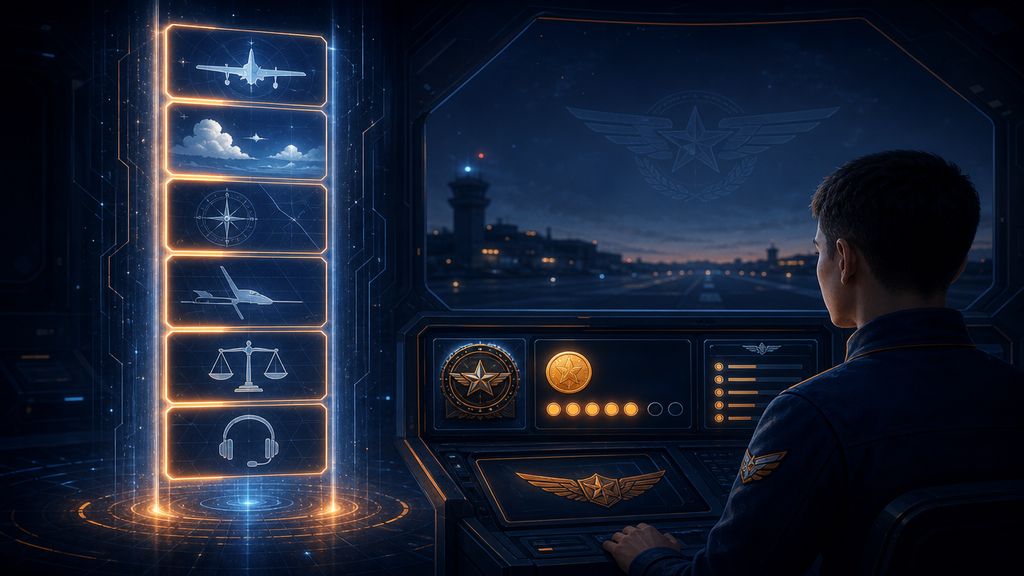
Phase 1 · Ground School — Are you ready?
“No astronaut launches before mastering the basics — you earn your readiness, you don't assume it.”
— Maria
In this section
- Six cards: health literacy, Mars basics, careers, One Health, Build Your Body, the Gate
- Each card: Learn It → Live It → Share It
- Sim A1 — the Ground School Gate (Jeopardy round + health-crisis scenario)
- ~12–20 hours total
You will earn
Health Literacy & Body Systems
The five pillars of a mission-ready human — Physical Health, Reliability, Communication, Teamwork, Leadership — each taught three ways: the concept, a real story (Scott Kelly, Jack Swigert and Apollo 13, the Challenger lesson, Chris Hadfield, Gene Kranz), and a You Decide scenario. Then the body itself: cells, organs, systems, plus ISS nutrition, sleep science, hydration, and a self-assessment against the 26 Astronaut Qualities.
Modules
Badges on this card
The pre-test is not graded. Answer honestly so the post-test shows what you actually learned.
Mars Basics · Career Exploration
1.2 Mars Basics
Earth versus Mars, then your body under threat: supply math for food, oxygen and water; bone-density math; CO₂ the invisible killer; ECLSS and its Earth parallels.
1.3 Career Exploration
The 10,000-to-1 ratio — for every astronaut, ten thousand people on the ground. Eight career families, career sampling, the honest truth about careers, virtual interviews. Gate: sample at least three careers.
Badges
Mission Supply Math is real arithmetic with real stakes. Show your work on the worksheet — the numbers are the lesson.
One Health · Build Your Body · The Gate
1.4 One Health Connections
The ripple effect and the five rings, home safety awareness, social determinants of health, reading community health data, the dual-use principle, and the One Health thread through the 26 Qualities.
1.5 Build Your Body Simulator
Three stages — cells, organs, body systems — in the Vehicle Assembly Building (next tab). Body Lab complete → self-assessment.
1.6 Ground School Gate — Sim A1
Review what you know, learn what the simulation expects, check your mindset, then launch: a Jeopardy-style round on Ground School content and a personal-health crisis — a crew member collapses and the team's reliability is tested.
Badges
Your First Earth Dispatch badge comes from the Share It — send one message that teaches someone something from Ground School.
Forces That Shape Everything · Your Body Is a Physics Lab
Maria's Unit — Forces That Shape Everything (grades 6–10, 9 lesson cards)
Centripetal force, gravity, inertia and orbital mechanics from hula hoops to Apollo 13. Two threads run through it: the space thread (slingshots, lunar orbits, the Artemis return) and the life thread (children orbiting families, communities as orbital systems).
Maria & Marco — Your Body Is a Physics Lab (12 lessons)
Roller coasters, basketball, running, jumping: the physics of forces read through the body. Ends with the Body Physics Bingo — 24 challenges.
BASICS Bingo — the health-readiness board (Tier 1)
Spin in a circle with your arms out. Feel the outward pull. Now name what pulls you back in. That's the whole unit in ten seconds.
Ground School — tools
Point a phone camera at any code — the live tool opens. Each code is unique to its page.
Worksheet · Mission Supply Math
Food
A crew of 4 eats 1.8 kg of food per person per day. The transit is 210 days. Total food mass = ____ kg. With a 20% safety margin = ____ kg.
Oxygen & water
One person uses about 0.84 kg of oxygen a day and drinks ~2.5 L of water. For 4 people over 210 days: oxygen ____ kg · water ____ L. If the recycler recovers 93% of water, how much must launch with you? ____ L
Bone density — the invisible countdown
Astronauts lose roughly 1–1.5% of bone mass per month without countermeasures. Over a 7-month transit that is ____ % to ____ %. What does the Physical Training system buy back?
Earth parallel
Where on Earth do people ration food, water or medicine until help arrives? What would you pack first?
Mission Log · Ground School
Which pillar (Physical Health · Reliability · Communication · Teamwork · Leadership) is my strongest? Weakest? Evidence:
One thing about my own body I did not know before the Body Lab:
My First Earth Dispatch — what I taught, and to whom:
Gate debrief: what did the crisis sim reveal about our team?
Every real astronaut keeps a log. Coins for the Learn It, Drops for the Share It — and the Log is where the training becomes yours.
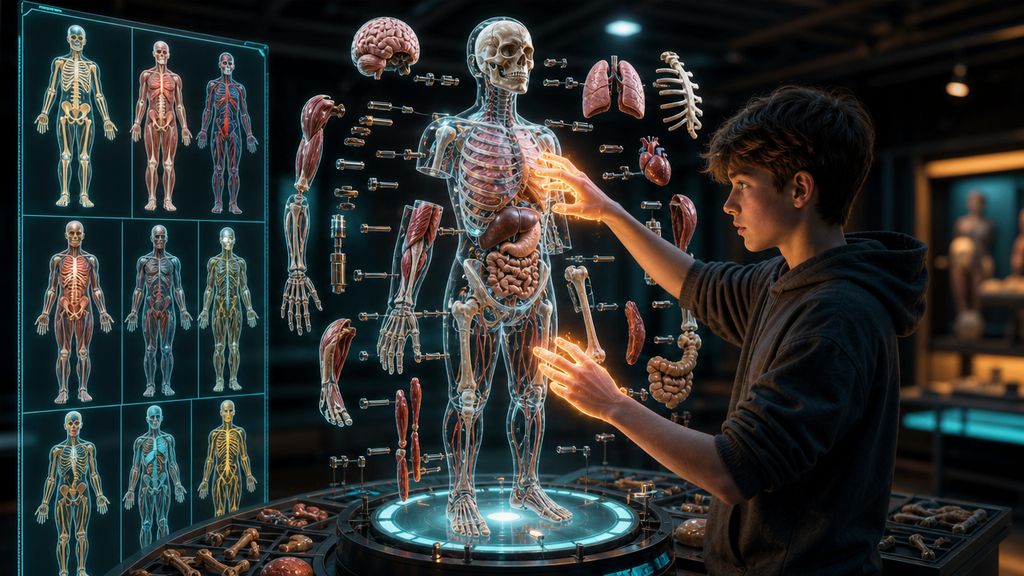
Suit Up — Build Your Body & Build-a-Spacesuit
“Your body is the vehicle that carries your mind through space — here on Earth and across the universe. Understand it by building it, part by part.”
— Dr. Rob
In this section
- Stage 1 · Cells — seven cell types
- Stage 2 · Organs — heart, lungs, brain required + two of your choice
- Stage 3 · Systems — four required body systems, 360° Explorer unlocks
- Build-a-Spacesuit — 12 EVA systems, goniometer range-of-motion lab
You will earn
Build Your Body — the Universal Assembly Engine
Every part is built in four layers: anatomy → how it works → keeping it healthy → when it goes wrong. Each layer has a Dr. Rob briefing, a Learn It, a Live It and a Share It.
Stage 1 — Building Blocks (Cells) — earns Cell Explorer
Stage 2 — Assembly (Organs) — earns Organ Builder (Heart, Lungs, Brain required + 2 of choice)
Stage 3 — Integration (Body Systems) — 360° Human Anatomy Collection (4 required systems)
Stage 3 opens the 360° Human Anatomy Collection — the same anatomy visualizer used across the Force for Health Academy.
Build the heart, lungs and brain first — they are required — then pick two organs you're curious about.
Twelve systems — suit me up
An EVA suit is a one-person spacecraft. Spacesuit Bingo runs its twelve systems as a board — a square opens to the science, a Live It and a Share It — and the goniometer fitting lab measures your own joints the way suit technicians measure an astronaut's.
Completing the set earns the Astronaut ID + EVA Certificate — the first printable credential of the program.
🎵 Phase theme: “Twelve Systems (Suit Me Up)”
Measure your shoulder, elbow and knee range of motion with the goniometer. Suit engineers call that the fit envelope.
Suit Up — tools
Point a phone camera at any code — the live tool opens. Each code is unique to its page.
Worksheet · Body-system ↔ spacesuit-system map
Draw a line, or write the pair. Then answer: what happens to the astronaut if each one fails?
| Spacesuit system | Body system it stands in for | If it fails… |
|---|---|---|
| Oxygen Supply | ||
| CO₂ Removal | ||
| Temperature Control | ||
| Humidity & Water | ||
| Pressure Containment | ||
| Radiation Shield | ||
| Communications | ||
| Life Support Backpack (PLSS) |
Range of motion
Shoulder ____° · Elbow ____° · Knee ____° · Which joint would a suit limit most, and what job would that make hard?
Mission Log · Suit Up
The organ I chose to build, and why:
One habit I changed this week because of what I learned about a body system:
If my body is my spacecraft, which system needs maintenance first?
Every real astronaut keeps a log. Coins for the Learn It, Drops for the Share It — and the Log is where the training becomes yours.

Phase 2 · Flight School — earn your wings
“Mercury got us off the ground, but Gemini taught the hard skills that made the Moon possible. Newton's laws, orbital mechanics, the Hohmann highway to Mars — it all clicks here.”
— Marcus
In this section
- Five cards (FS-01 → FS-05) with Pause & Reflect eras
- Flight Simulator · Instrumentation Bingo · History of Flight Bingo
- Critical Thinking Trainer · Adapt, Improvise, Overcome · Leave It Better · Interview Coach
- Sim A2 — Navigation Crisis gate
You will earn
The five cards
Phase 2: Flight School — STEM Depth + Career Exploration. You are a citizen of the world. You represent the best people on Earth. Now prove it. Flight School takes you deeper into the science, the systems, the careers,……
Card 2.5 is the gate: a navigation error (the Mars Climate Orbiter lesson), a communication problem, and a decision under time pressure. Pass it and Mission 1 unlocks.
Simulator, systems, pioneers
Flight Simulator — four eras of flight physics
Balloon (lighter than air) → propeller → jet → rocket. Canvas simulations with experiment claims: make a prediction, fly it, see if you were right.
Instrumentation Bingo — 16 spacecraft systems
History of Flight Bingo — 16 pioneers
🎵 Phase theme: “Thrust, Lift, Drag”
Every spacecraft system has a body-system twin. ECLSS is your lungs and kidneys; the IMU is your inner ear. Find the pair for each square.
Think, adapt, steward, interview
Run the Interview Coach with a partner and time each other. Sixty seconds is longer than you think and shorter than you need.
Flight School — tools
Point a phone camera at any code — the live tool opens. Each code is unique to its page.
Worksheet · The four forces & one launch
Thrust · Weight · Lift · Drag
Draw a rocket on the pad. Label the four forces with arrows. Which two must be unequal for the rocket to leave the ground, and in which direction?
Newton on the launchpad
F = ma. The SLS core stage produces about 8.8 million newtons of thrust and the stack masses about 2.6 million kg at liftoff. Acceleration at T+0 ≈ ____ m/s². Subtract gravity (9.8) → net ≈ ____ m/s².
The Hohmann highway
Why does the launch window to Mars open only every ~26 months? Sketch Earth's and Mars' orbits and the transfer arc.
Mission Log · Flight School
My Flight Simulator prediction that was wrong — and what it taught me:
The critical-thinking lens I skip most often (Reality · Values · Scope · Consequence):
Navigation Crisis debrief: the decision we made, and what we would change:
Every real astronaut keeps a log. Coins for the Learn It, Drops for the Share It — and the Log is where the training becomes yours.

Career Training — sixty careers, find your seat
“These aren't pretend jobs — they have real training steps, real salaries, and real first patients. Learn these pathways now, and the day someone needs you, you'll already know how to step up.”
— Dr. Rob
In this section
- Career Ambassador — 10 careers with Dr. Rob videos and honest Q&A
- Pre-Apprentice Healthcare Pathway — 16 real entry careers
- Health Careers · STEM Careers · Self-Reliance Skills · Ambassadors boards
- Retake the Career Compass
You will earn
Ten careers, twelve honest questions
The twelve questions every ambassador answers
Log three careers you had never heard of before this week.
Sixteen real doors
Sixteen entry careers, each with real training steps, a pathway from middle school to career entry, and hands-on missions. Three tiers: Entry Level · Hospital/Clinic · Advanced/Specialty.
Bingo patterns
Standards: NHES Standard 1 · CTE Health Science · ISTE 1.1
Pick one door. Find the real training program nearest you and write down how long it takes.
Four bingo boards
Health Careers for Mars (12 videos)
STEM Careers for Mars
Self-Reliance Skills — medical care when there is no 911
AMBASSADORS Career Bingo (Tier 2)
Every square has a Learn It, Live It and Share It behind it. The square is the door; the coins are behind it.
Careers — tools
Point a phone camera at any code — the live tool opens. Each code is unique to its page.
Worksheet · Career interview (STAR)
Who I interviewed
Name · Job title · Where they work · How I found them
Their answers to three of the twelve questions
Q: ____________ A:
My STAR story for this career
Situation · Task · Action · Result — sixty seconds, out loud.
Mission Log · Careers
My Compass Top 3 at the start of the program → now:
Three careers I had never heard of:
The career that surprised me most, and why:
One person I could shadow for a day:
Every real astronaut keeps a log. Coins for the Learn It, Drops for the Share It — and the Log is where the training becomes yours.

Mission 1 · Build the Rocket
“A rocket is just a very honest team: if one system fails, none of them fly. This is where knowledge becomes something that actually leaves the ground.”
— Marcus
In this section
- Five cards (3.1 → 3.5) inside the Vehicle Assembly Building
- Eight rocket systems, each gated by a knowledge badge
- Rocket Assembly Builder — six-stage Artemis SLS stack
- Sim A3 — Launch Control gate
You will earn
From blueprint to launchpad
Phase 3: Build the Rocket — From Blueprint to Launchpad. Flight School taught you the science and the careers. Now you engineer the machine. Phase 3 takes you inside the Artemis Space Launch System — the most powerful r……
Gate to enter: 500 Healthy Coins, 300 Drops, and the Physics, Engineering and Health & Body badges. Start earning in Ground School.
Every system needs a badge
| System | Badge | Cost | Earth application |
|---|---|---|---|
| Rocket Structure Fuselage, heat shield, payload fairing | Engineering | 180 Coins | Materials science in buildings, bridges, vehicles, infrastructure |
| Propulsion System Fuel type, thrust, staging sequence | Chemistry | 220 Coins | Combustion chemistry in engines, energy generation, industrial processes |
| Life Support Air, water, food for 8-month transit | Biology | 160 Coins + 120 Drops | Clean air, clean water, nutrition — core public health competencies |
| Navigation & Trajectory Launch window, orbital mechanics | Math & Calculus | 200 Coins | GPS, weather forecasting, logistics, data science careers |
| Crew Selection Qualifications, skills matrix, fitness | Civics & Leadership | 140 Drops | Team building in healthcare, emergency response, business, sports |
| Physical Training Strength, cardiovascular, bone density | Health & Body | 160 Drops | Preventing heart disease, osteoporosis, diabetes — same exercises |
| Mission Planning Weight budget, supplies, timelines | Math & Calculus | 140 Coins + 80 Drops | Project management, logistics, budgeting in every career field |
| Psychology & Crew Compatibility Resilience, communication, stress | Psychology | 180 Drops | Communication styles, mental health, team cohesion in any workplace |
Five systems are STEM-focused and paid in Coins; three are human-focused and paid in Drops. All eight are required for launch clearance.
Six stages of the Artemis SLS
Assemble NASA's Artemis SLS component by component: each stage has LEARN text, Careers at This Stage, Flashcards, and a 3-question Quiz Gate before installing. 6 stages → ignition sequence: 'Your SLS is ready for Mars.
The launch team — 12 careers you meet in Mission 1
Build it once for fun, then once for the badge. The three-question quiz gate before each stage is the real Learn It.
Mission 1 — tools
Point a phone camera at any code — the live tool opens. Each code is unique to its page.
Badge cards · Mission 1
Physics Badge
Physical Science- Newton's three laws of motion and how they apply to launch and spaceflight
- Relationship between force, mass, and acceleration (F=ma)
- Kinetic vs. potential energy and energy transfer in propulsion
Chemistry Badge
Chemistry & Combustion- What a combustion reaction is and what products it creates (CO₂, H₂O, energy)
- The role of oxidizers — why rockets carry their own oxygen supply
- Liquid vs. solid propellants: trade-offs in thrust, control, and storage
Badge cards · Mission 1
Engineering Badge
Structural Engineering & Materials- Properties of materials: strength, flexibility, thermal resistance, weight
- What a heat shield does and why reentry generates extreme heat (atmospheric friction)
- Payload fairings: protecting cargo during launch from vibration and aerodynamic forces
Math & Calculus Badge
Applied Mathematics- Proportional reasoning: scaling quantities up and down (fuel, supplies, distance)
- Rate problems: consumption per day, distance per time, depletion calculations
- Basic orbital concept: why a spacecraft launched at the right moment intercepts Mars
Badge cards · Mission 1
Biology Badge
Life Science & Systems Biology- Cellular respiration: how cells convert oxygen and glucose to energy and CO₂
- Why CO₂ buildup is dangerous: hypercapnia, its symptoms, and timeline
- Water in the body: hydration, electrolytes, dehydration stages and effects
Civics & Leadership Badge
Organizational Design & Civic Responsibility- Why crew selection is a systems problem, not just a performance problem
- Complementary skills: why a crew of all pilots is worse than a mixed crew
- Role clarity: what happens when responsibilities are unclear in high-stakes situations
Badge cards · Mission 1
Health & Body Badge
Exercise Science & Human Physiology- What happens to muscle mass in microgravity and how resistance exercise mitigates it
- Bone density loss in space: calcium leaching, the role of weight-bearing exercise on Earth
- Cardiovascular adaptation to zero-g: fluid shift, orthostatic intolerance on return
Psychology Badge
Human Psychology & Behavioral Science- Personality frameworks: how different people process stress, information, and conflict
- Psychological safety: what it is, what destroys it, and what it costs when absent
- Long-duration confinement: how isolation and monotony affect mood, cognition, and relationships
Worksheet · Launch readiness checklist
| System | Badge earned? | Coins / Drops paid | Installed ✓ |
|---|---|---|---|
| Rocket Structure | |||
| Propulsion | |||
| Life Support | |||
| Navigation & Trajectory | |||
| Crew Selection | |||
| Physical Training | |||
| Mission Planning | |||
| Psychology & Crew Compatibility |
The rocket equation
Δv = vₑ · ln(m₀/m₁). If exhaust velocity is 4,400 m/s and the mass ratio is 12, Δv ≈ ____ m/s. Why are rockets ninety percent fuel?
Mission Log · Mission 1
The system I found hardest to earn, and the badge that gated it:
A rocket is a very honest team. Where is my team's weakest system?
Launch Control debrief: our go/no-go call and what the data actually said:
Every real astronaut keeps a log. Coins for the Learn It, Drops for the Share It — and the Log is where the training becomes yours.

Mission 2 · The Journey — 32 weeks to Mars
“Surviving the trip isn't just engineering, it's teamwork and patience, and the crew that communicates wins. Strap in, Marstronaut. Mars is seven months away.”
— Marcus
In this section
- Five cards (4.1 → 4.5): transit science, crew systems, mission ops, the human factor
- 32 virtual weeks · six crises · two-level decisions
- An Earth Dispatch after every resolved event
- Sim A4 — Deep Space Emergency gate
You will earn
Seven months, three hundred million miles, one crew
Phase 4: The Journey — 7 Months, 300 Million Miles, One Crew. You've built the rocket. Now you're inside it. The journey to Mars takes 7–9 months — longer than any voyage in human history. (Simulation: 32 virtual weeks……
Gate to depart: 800 Healthy Coins, all eight systems built, First Aid and Psychology badges plus everything from Mission 1.
Every Mars problem is an Earth problem
| Event | On the ship | Earth parallel | Badge · cost |
|---|---|---|---|
| Laceration Emergency | Deep cut during EVA; uncontrolled bleeding; 18-min Earth communication delay | Wound care at a sports event, hiking accident, or school emergency | First Aid · 80 Drops |
| Food Poisoning Outbreak | Contaminated food supply; two crew members vomiting; dehydration risk | Post-hurricane food safety failure; oral rehydration until FEMA arrives | Nutrition · 70 Drops |
| Solar Radiation Storm | Particle event detected; 30-min window to reach shielded section | UV exposure & sun safety; cumulative radiation = skin cancer risk on Earth | Biology · 80 Coins |
| Psychological Crisis | Week-14 crew member withdrawal, sleep changes, appetite loss | Depression & burnout signs in a friend or colleague; mental health first aid | Psychology · 90 Drops |
| Supply Rationing | Food at 35% with 12 weeks remaining; unsustainable consumption rate | Post-disaster rationing until relief arrives; equitable distribution decisions | Health & Body · 60 Coins + 60 Drops |
| Equipment Malfunction | CO₂ scrubber failure; incompatible replacement parts; 4 hours to fix | Apollo 13 resourcefulness; improvised problem-solving with available materials | Engineering · 100 Coins |
Every event asks a two-level decision: fix the problem on the ship, then write the lesson home. Every resolved event generates an Earth Dispatch — the Share It moment and a ready-made formative writing piece.
The people on the ground
Mission Control roles and their Earth equivalents: Flight Director, CAPCOM, EECOM, GNC, FIDO, Surgeon. Every one has a hospital, school or city-hall twin.
Eight careers you meet in transit
The human factor
Isolation psychology and the third-quarter phenomenon. You have already been on this mission — lockdowns, dorms, family reunions — and crew psychology is just a precise name for how people get along in tight spaces.
Your Earth Dispatch is read by someone on Earth. Write it like it matters.
Mission 2 — tools
Point a phone camera at any code — the live tool opens. Each code is unique to its page.
Badge cards · Mission 2
First Aid Badge
Emergency First Response- How to apply direct pressure correctly — location, material, duration
- Tourniquet application: when to use one, how to apply it, the 2-inch rule
- Wound assessment: superficial vs. deep vs. penetrating — when to seek further care
Nutrition Badge
Applied Nutrition & Food Safety- Macronutrients: carbohydrates, proteins, fats — their roles and caloric values
- Foodborne illness: common causes, onset timelines, symptoms, and when to escalate
- Oral rehydration science: why electrolytes matter, not just fluids — sodium-glucose cotransport
Badge cards · Mission 2
Anatomy Badge
Human Anatomy & Musculoskeletal System- Major bones of the body and their structural roles: axial vs. appendicular skeleton
- Types of fractures: closed vs. open, complete vs. incomplete, comminuted
- Low-gravity physiology: why fractures in space require different considerations than on Earth
Mental Health Badge
Mental Health First Aid & Wellbeing- Warning signs of depression: persistent sadness, withdrawal, sleep changes, appetite changes, hopelessness
- Warning signs of burnout: exhaustion, cynicism, reduced efficacy, physical symptoms
- Mental health first aid: Ask (directly), Listen (without judgment), Connect (to resources and people)
Badge cards · Mission 2
Communication Badge
Interpersonal Communication & Conflict Resolution- Active listening: paraphrase, reflect, ask open questions before responding
- Non-verbal communication: how tone, body language, and silence communicate
- Intent vs. impact: why someone can cause harm without meaning to, and why impact is what matters
Worksheet · Earth Dispatch
Transmission header
Week ____ of 32 · Distance from Earth ______ km · Signal delay ____ min · Event:
Level 1 — what we did on the ship
The problem · The options · The decision · The result
Level 2 — the lesson for Earth
Where does this same problem happen at home, at school, in our town? What should someone there know before it happens?
Mission Log · Mission 2
Week 14. Someone on the crew has gone quiet. What did I notice, and what did I do?
The crisis that scared me most, and the badge that got us through it:
My best Earth Dispatch — one sentence I'm proud of:
Every real astronaut keeps a log. Coins for the Learn It, Drops for the Share It — and the Log is where the training becomes yours.

Mission 3 · Survive on Mars
“Survival isn't just engineering — it's caring for people and place at the same time, the hardest and most human skill there is. Pass this, and you've earned the name Marstronaut.”
— Dr. Rob
In this section
- Five cards (5.1 → 5.5): environment, habitat, colony ops, Earth return
- Three colony build levels · consumables · medical and community emergencies
- Sim A5 — Colony Crisis, the final test
You will earn
Build a home. Build a future. Build for everyone.
Phase 5: Survive on Mars — Build a Home. Build a Future. Build for Everyone. Everything you've learned — body systems, spacecraft systems, careers, teamwork, resilience — comes together now. You're building the first hu……
Gate to land: 900 Drops total, three or more Earth Dispatches sent, Biology and Civics badges plus everything from Missions 1 and 2.
From unmanned outpost to closed loop
Earth parallel: Infrastructure investment before a community can be inhabited — utilities, housing, communications
Earth parallel: Emergency supply management; post-disaster resupply; refugee settlement support
Earth parallel: Sustainable agriculture, water recycling, community food systems, circular economy
Medical emergencies
| Emergency | Badge | Supply pack | Earth parallel |
|---|---|---|---|
| Laceration | First Aid | First Aid Kit (bandages, tourniquet) | Wound care at sports events, schools, workplaces |
| Broken Bone | Anatomy | Splint Kit (rigid splints, wrap) | Fracture management by first responders, coaches, parents |
| Heat Exhaustion | Health & Body | Hydration Pack (electrolytes, cooling pads) | Heat illness in outdoor work, sports, summer community events |
The hardest and most human skill
| Scenario | Situation | Earth parallel | Approaches |
|---|---|---|---|
| Bullying & Exclusion | One colonist mocked and excluded; trust fracturing | Every school and workplace; power imbalance + bystander silence | Discussion & vote (ok), Mediation (best), Colony charter (structural) |
| Grief & Loss | Colonist received news of death on Earth; unable to function | Bereavement in schools and workplaces; knowing how to support, not fix | Discussion (ok), Mediation (best), Colony charter (poor — rules cannot cover grief) |
| Isolation & Loneliness | Colonist stopped joining meals; crew noticed but not acted | Depression/burnout warning signs; noticing and responding with curiosity | Discussion (ok), Mediation (best), Colony charter (poor — cannot legislate belonging) |
| Communication Breakdown | Two colonists misunderstood a critical task; work stalling | Workplace conflict from assumptions; intent vs. impact | Discussion (good), Mediation (best), Colony charter (structural fix only) |
Three resolution approaches — Discussion & vote · Mediation · Colony charter — and the lesson that rules cannot cover grief and you cannot legislate belonging. Everything built on Mars comes back to help Earth: ISRU → carbon capture; water extraction → drought resilience; closed-loop food → community food systems.
🎵 Phase theme: “Mission Control (Reach the Red)”
Watch what fails first in the Colony Builder. It is almost never the machinery.
Mission 3 — tools
Point a phone camera at any code — the live tool opens. Each code is unique to its page.
Badge cards · Mission 3
Empathy Badge
Social-Emotional Intelligence- Cognitive vs. affective empathy: understanding another's perspective vs. feeling their emotion
- Active perspective-taking: the practice of deliberately considering a situation from another viewpoint before responding
- Emotional recognition: identifying emotions in others through verbal and non-verbal cues
Conflict Resolution Badge
Mediation & Restorative Practice- Types of conflict: values conflicts (hardest to resolve), resource conflicts, relationship conflicts, data/information conflicts
- Mediation principles: neutrality, confidentiality, voluntary participation, informed consent
- The mediation process: opening, storytelling, problem identification, option generation, agreement
Badge cards · Mission 3
Sustainability & Earth Systems Badge
Environmental Science & Closed-Loop Systems- The water cycle: evaporation, condensation, precipitation — and how human systems disrupt it
- The carbon cycle: how CO₂ moves through atmosphere, plants, animals, and soil
- Closed-loop vs. open-loop systems: why linear (take-make-dispose) is unsustainable
Community Health & SDOH Badge
Public Health & Social Determinants of Health- The five SDOH domains: economic stability, education access, healthcare access, neighborhood & built environment, social & community context
- How each SDOH domain maps onto colony survival: shelter (housing), water extraction (environment), food (economic stability), radio (social connection), medical bay (healthcare access)
- Health equity: why equal treatment is not the same as equitable outcomes
Worksheet · Colony charter
Our colony's five rules
Write five rules a crew of eight could actually live by for a year. Test each one: does it cover grief? Does it create belonging, or only forbid harm?
Resource budget for one Sol
Water in ____ L · recycled ____ % · Power ____ kWh · Food ____ kg · Which one runs out first?
Earth return
One Mars technology → one Earth application → who benefits in my town:
Mission Log · Mission 3
The community scenario that felt most like my real life:
Discussion, mediation, or charter — which did our crew reach for first, and was it right?
Colony Crisis debrief: what held, what broke, who stepped up?
I have earned the name Marstronaut. What does that mean on Earth?
Every real astronaut keeps a log. Coins for the Learn It, Drops for the Share It — and the Log is where the training becomes yours.
Faith, Culture & Health
“The crew will pray differently, eat differently, and grieve differently. The competency isn't knowing every rule. It's knowing to ask.”
— Chaplain Rev. Tanya Mitchell
Fifteen Dr. Rob lessons open each tradition through the health lens — what it teaches, and one specific act of respect — on a 4×4 board with a One Health center square.
Kosher and halal meals, Ramadan and the Bahá'í fast, gelatin capsules and ahimsa, sacred items never moved without permission. The Marstronaut rule: ask, don't assume.
Start with the tradition you know least about. Teach one caregiver fact to someone this week.

The Arsenal — boards, games & simulations
“Sixty collectible cards, four rarity tiers, and a prize wheel. Learning should feel like winning.”
— Marcus
In this section
- Eleven bingo boards — every square a Learn It · Live It · Share It
- Four games
- Five simulation gates, one per column of the 5×5
- The Card Collection and the Spin4Rewards wheel
- Mission Health Rescue — the free arcade game
You will earn
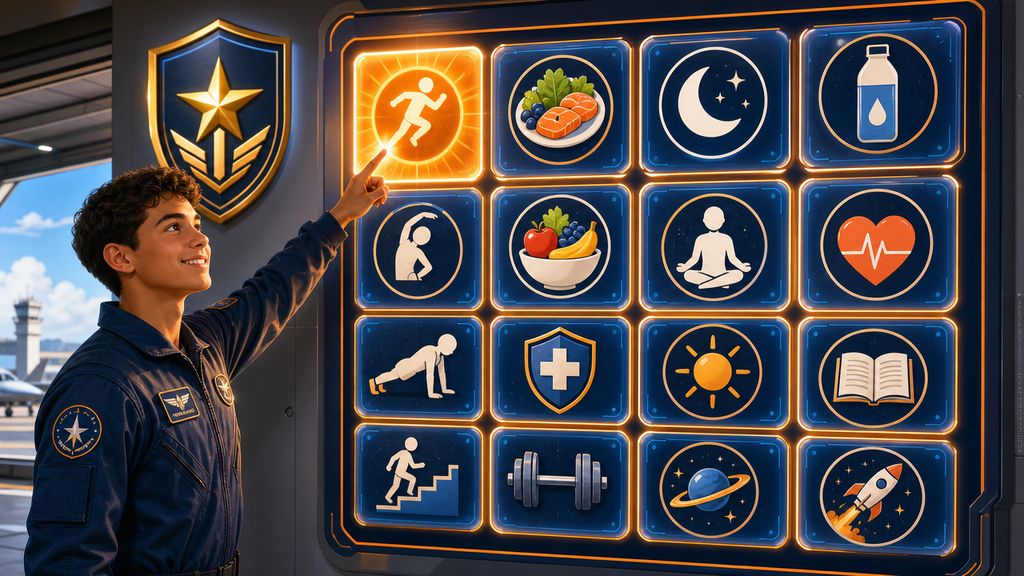
BASICS Bingo
The health-readiness board. Sixteen missions across nutrition, fitness, sleep, mental health, substance prevention, cardiovascular and bone health, vision, first aid, dental, hearing, environmental and immune health, relationships, academics and personal growth.
What's on it
Start with Mission Sleep. It is the one most trainees are failing without knowing it.
Play log
What I learned · who I taught it to (the Share It):
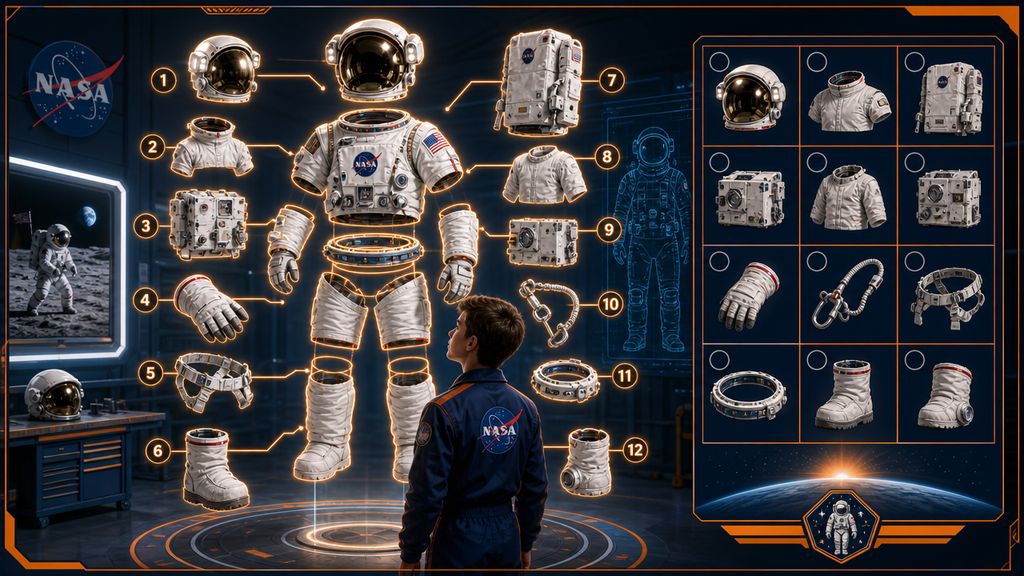
Build-a-Spacesuit Bingo
The twelve EVA systems as a 4×3 board, with the goniometer range-of-motion fitting lab. Completing the set earns the Astronaut ID + EVA Certificate.
What's on it
Measure your own joints before you open the Mobility Joints square.
Play log
What I learned · who I taught it to (the Share It):
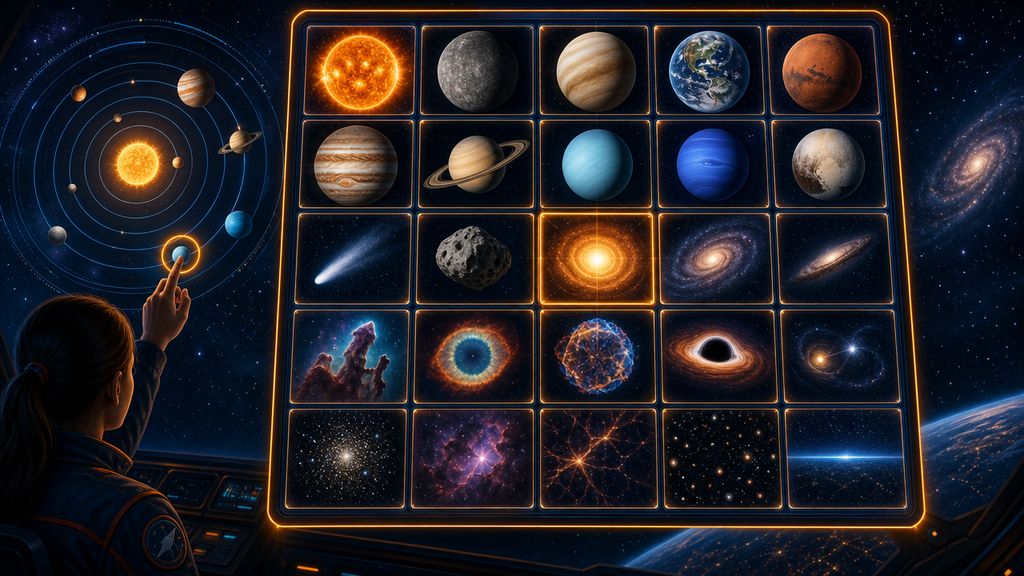
Space Bingo — know your universe
A 5×5 grid from the Sun to the whole Universe with an interactive solar-system visualizer, depth cards, quizzes and coin rewards. Activities include a solar observation, a Mars gravity simulator, a lunar phase tracker, finding the Milky Way and a cosmic scale model.
What's on it
Do the Cosmic Scale Model outdoors — it takes a whole field.
Play log
What I learned · who I taught it to (the Share It):
Instrumentation Bingo — 16 systems
Every spacecraft runs on systems the way your body runs on organ systems. Sixteen essentials — IMU, RCS, ECLSS, GN&C, EVA, TPS and more — in Navigation, Protection, Science and Operations rows and Alpha–Delta columns, with share-with-family, social and teacher options.
What's on it
ECLSS is your lungs and kidneys; the IMU is your inner ear. Find the twin for every square.
Play log
What I learned · who I taught it to (the Share It):

History of Flight Bingo — 16 pioneers
Sixteen people who made the stars reachable, from the Montgolfier brothers and Tsiolkovsky to Bessie Coleman, the Tuskegee Airmen, Katherine Johnson, Mae Jemison and the Inspiration4 crew — real images, quiz gates, and collectible PDF trading cards.
What's on it
Print the trading card for the pioneer whose story surprised you most.
Play log
What I learned · who I taught it to (the Share It):
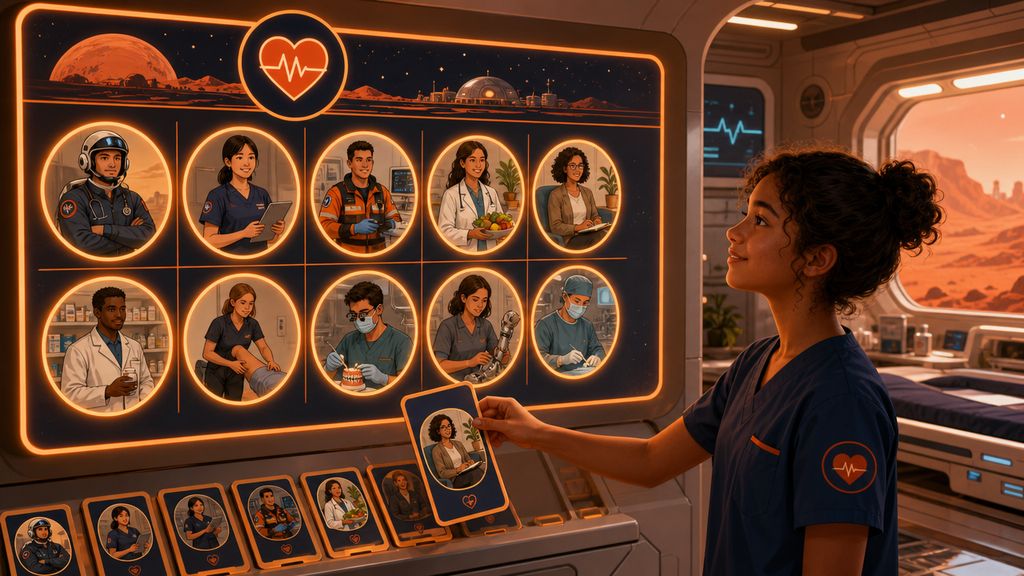
Health Careers for Mars
A 4×3 board of twelve Vimeo career videos — exercise physiologists, space medicine, biomedical engineers, nutrition scientists, radiobiologists, telemedicine, behavioral health, epidemiologists, pharmacologists, occupational health — plus a welcome and a conclusion. Each with Learn It · Live It · Share It.
What's on it
Watch one video, then find that career's twin in your own town's hospital.
Play log
What I learned · who I taught it to (the Share It):

STEM Careers for Mars
“Top 10 careers that will get us to Mars” — aerospace engineers, astrophysicists, astrobiologists, planetary geologists, roboticists, space medicine, software and data, spacecraft designers, comms and media — ending on Your Dream Career.
What's on it
Your Dream Career is the last square on purpose. Write it down before you open it.
Play log
What I learned · who I taught it to (the Share It):
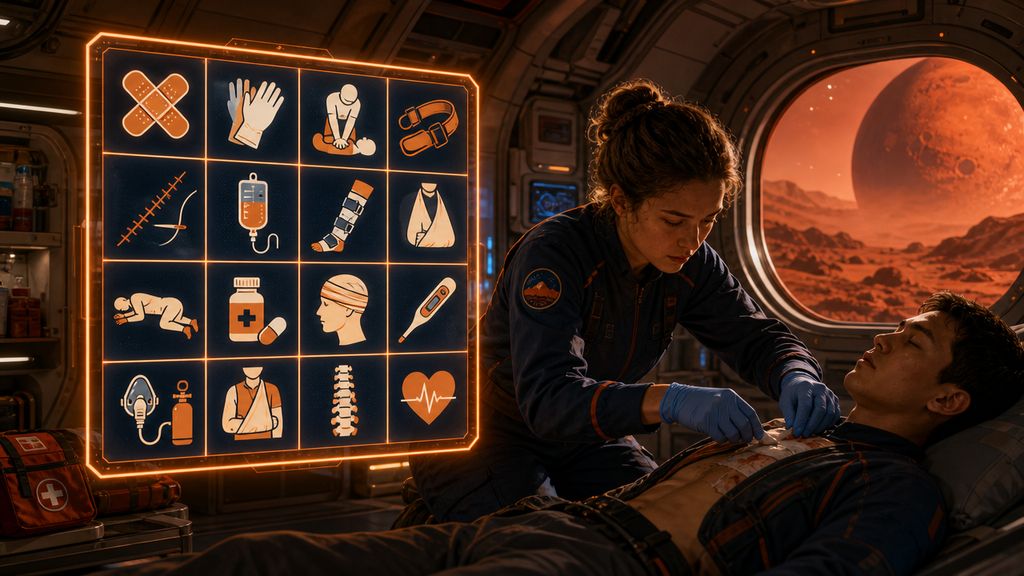
Self-Reliance Skills — medicine when there is no 911
“Top 10 skills for self-reliant medical care on Mars” — wound care, burns, fractures, IV therapy, medication and pharmacy, psychological first aid, dental emergencies, infections, telemedicine, BLS. Emergency medical training for Mars survival, useful on Earth tomorrow.
What's on it
Ask an adult you trust which of these ten they could actually do. Then ask yourself.
Play log
What I learned · who I taught it to (the Share It):
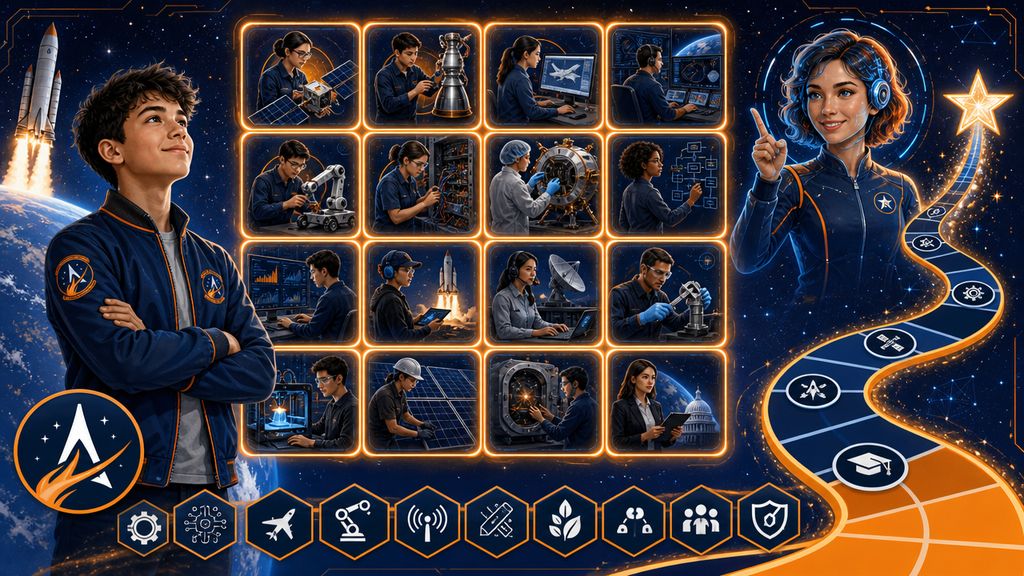
AMBASSADORS Career Bingo
The Tier 2 career board: sixteen space and health careers from aerospace engineer and flight surgeon to space agriculture, data science and advanced EMT — with lesson plans and a Teacher's Guide (grades 5–12, 45 minutes, Health/Science/CTE).
What's on it
An Ambassador has finished Ground School and Flight School. This board is the badge of that rung.
Play log
What I learned · who I taught it to (the Share It):

Faith, Culture & Health Bingo
Fifteen traditions and a One Health center square, each opening one faith through the health lens with a Dr. Rob lesson, a quiz, a Live It and a Share It. Full card earns the Cultural Competency badge.
What's on it
Start with the tradition you know least about.
Play log
What I learned · who I taught it to (the Share It):

Forces Bingo · Body Physics Bingo
Two 5×5 Share It boards that close the companion units: Forces That Shape Everything (24 challenges — hula hoops, slingshots, orbits, human orbits) and Your Body Is a Physics Lab (24 challenges — roller coasters, basketball, running, jumping). Both live inside their unit pages.
What's on it
Every square is a Share It: you have to show someone, not just tell them.
Play log
What I learned · who I taught it to (the Share It):

Artemis Rocket Assembly Builder
Assemble NASA's Artemis SLS component by component. Each of six stages has Learn text, Careers at This Stage, flashcards and a three-question quiz gate before you may install it. Six stages → ignition sequence → “Your SLS is ready for Mars.”
What's on it
Build it once for fun, then once for the badge.
Play log
What I learned · who I taught it to (the Share It):
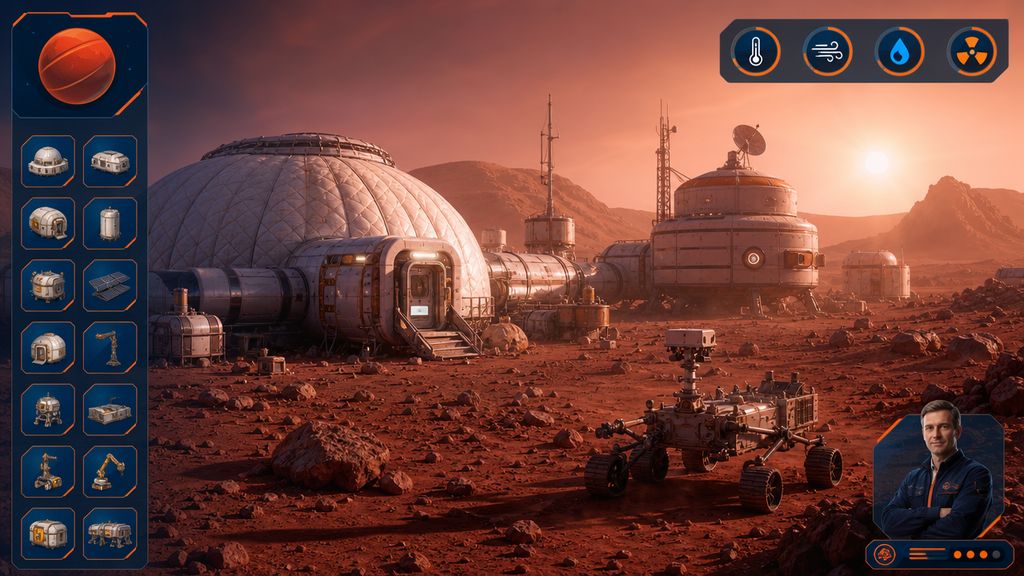
Mars Colony Builder
Free-play the colony: solar power, shelter, oxygen, water extraction and comms at Level 1; consumables as colonists arrive at Level 2; greenhouse, waste recycler, CO₂ scrubber and seed vault at Level 3. Watch what fails first.
What's on it
It is almost never the machinery that fails first.
Play log
What I learned · who I taught it to (the Share It):
Space History Gallery
A walk through the eras of flight and spaceflight — balloon, propeller, jet, rocket — that feeds the Flight Simulator and the History of Flight board. Real images, real dates, real people.
What's on it
Find the year you were born on the timeline. What was flying?
Play log
What I learned · who I taught it to (the Share It):
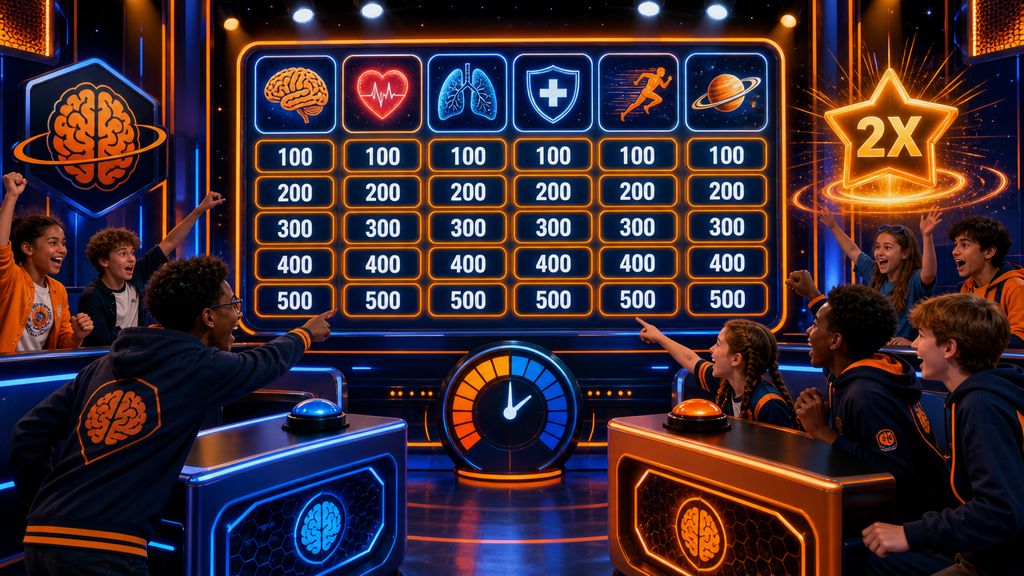
Category Quest
A fast category-sorting game built with the FFH Game Maker: drop each item into its Marstronaut category before the clock runs out. Coins for accuracy, bonus for streaks.
What's on it
Play it once slow, then once for speed.
Play log
What I learned · who I taught it to (the Share It):
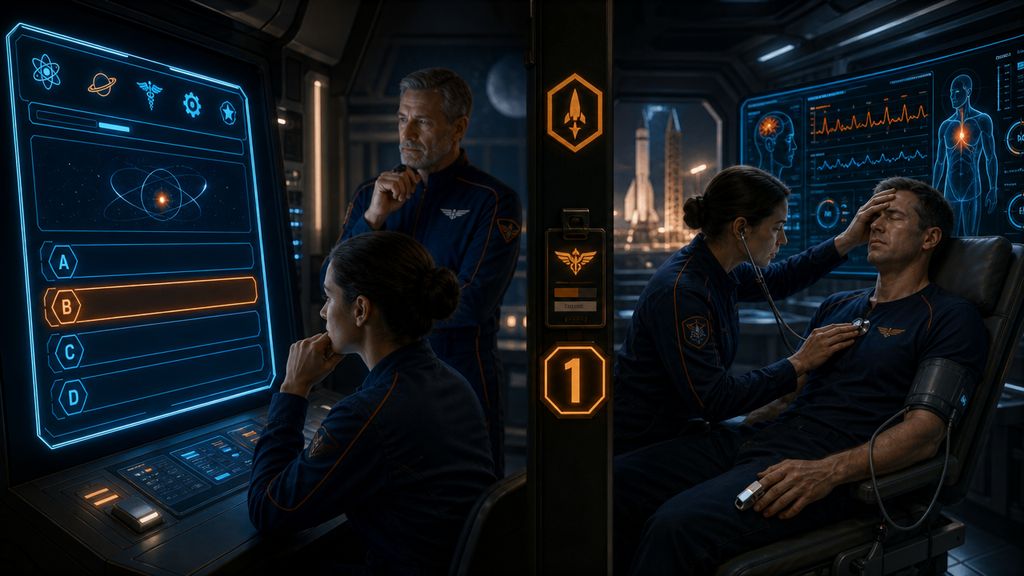
Sim A1 — Ground School Gate
The end of Column One: a Jeopardy-style review of Ground School content, then a personal-health crisis — a crew member collapses and the team's reliability is tested. Pass it and Flight School unlocks.
What's on it
Fill your Mission Log before the gate; the review draws on it.
Play log
What I learned · who I taught it to (the Share It):

Sim A2 — Navigation Crisis
Three crisis layers: a navigation calculation error (the Mars Climate Orbiter lesson — units matter), a communication problem, and a decision under time pressure. Pass it and Mission 1 unlocks.
What's on it
Check your units. Then check them again.
Play log
What I learned · who I taught it to (the Share It):

Sim A3 — Launch Control
Three layered crises on the pad: a weather hold with launch-window math, a sensor anomaly (SRB segment temperature), and the go/no-go call. Launch clearance is earned here.
What's on it
Say the numbers out loud before you vote.
Play log
What I learned · who I taught it to (the Share It):

Sim A4 — Deep Space Emergency (Apollo 13)
Day 147 of 210, a 12.5-minute signal delay, and three crises at once: a solar storm with thirty minutes to shelter, a life-support fault, and a crew under strain. Improvise with what is on board.
What's on it
You cannot wait for Earth to answer. Decide, then transmit.
Play log
What I learned · who I taught it to (the Share It):
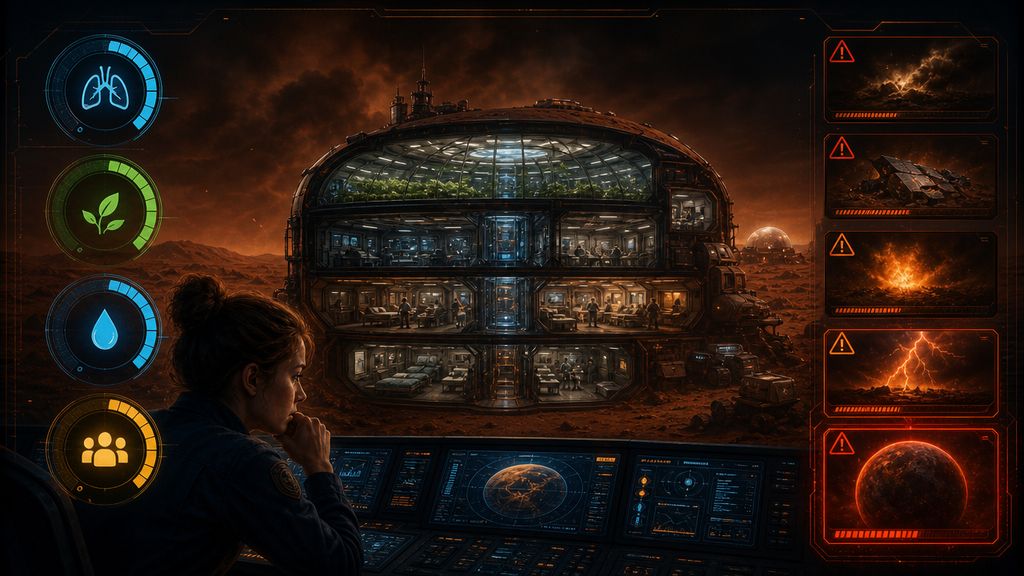
Sim A5 — Colony Crisis
The final test: a habitat breach from a micrometeorite, a medical emergency, and a community crisis, layered. Four status gauges — life support, greenhouse, water, crew morale — and a young commander making the call.
What's on it
Pass this and you have earned the name Marstronaut.
Play log
What I learned · who I taught it to (the Share It):
Card Collection & Spin4Rewards
Sixty collectible trading cards in six categories — Planets, Rockets, Missions, Pioneers, Careers, Achievements — across four rarities (Common, Uncommon, Rare, Legendary), with flip-animation detail cards and the Spin4Rewards prize wheel (+50 Coins, Double XP, Launch Ticket).
What's on it
A Legendary card is rarer than a full bingo card. Trade wisely.
Play log
What I learned · who I taught it to (the Share It):

Mission Health Rescue
The free arcade game on the Marstronaut channel: gobble the good, dodge the hazards, grab a power-up. Six levels — Fuel for Space, Body Systems, Mind & Sleep, Protect & Prevent, Senses & Planet, Space Readiness — each with a knowledge check. Clear all six for the Mission Specialist badge.
What's on it
No sign-up needed to try. Coins are saved for members.
Play log
What I learned · who I taught it to (the Share It):

Graduation & Debrief — your ticker-tape parade
“Whether or not you ever go to Mars, you are already a Force for Health. Take your bow, Marstronaut. Then go make both worlds better.”
— Coach Lucy
In this section
- Mission summary printed from Mission Control
- Read one Earth Dispatch aloud
- Certificate of Completion
- Next rung: Ambassador → Group Leader
You will earn
What you now know
When astronauts came home, New York threw shredded paper out of every window; John Glenn's parade in 1962 drew four million people. The debrief is that parade.
Mission summary fields
What the graduate can do
- You can explain how a rocket works — and build one.
- You can calculate orbital mechanics — and ask for help when stuck.
- You can manage a crew through 32 weeks of isolation — because you've lived through lockdowns, dorms, and family reunions.
- You can build and sustain a colony on Mars — managing water, power, food, and human conflict.
- You can identify 60+ real careers in space, health, and STEM.
- You understand that YOUR health IS Earth's health.
CERTIFICATE OF COMPLETION — recognized as a MARSTRONAUT: a health-promoting citizen capable of representing humanity, whether on Mars or on Spaceship Earth. Signed Dr. Robert Gillio, CMO.
🎵 Capstone theme: “Force for Health (Mission Complete)”
Graduates are eligible for the Ambassador tier — and Ambassadors become Group Leaders who mentor the next cohort. The ladder is real.
Graduation — tools
Point a phone camera at any code — the live tool opens. Each code is unique to its page.
Mission Log · Final transmission
The person who started this training is not the person crossing the line. What changed?
Sixty careers. The one I am going to look into first:
My health is Earth's health. One habit I am keeping:
To the next trainee: one sentence of advice.
Every real astronaut keeps a log. Coins for the Learn It, Drops for the Share It — and the Log is where the training becomes yours.

Tool directory
All tools live at https://theforce.health/marstronaut/.
Two planets. One mission.
Your health is Earth's health.