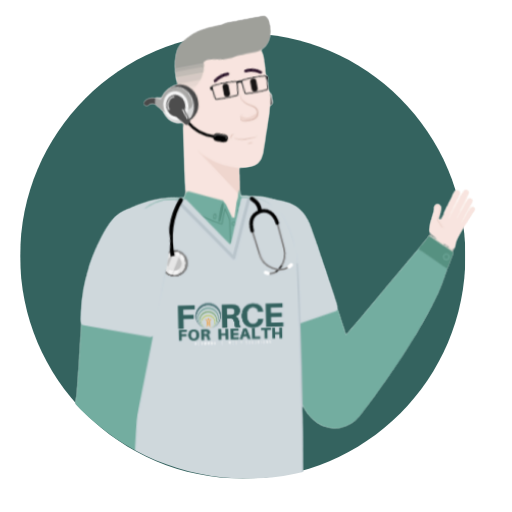
Dr. Rob GillioClinical lead — the science behind every Learn It module.
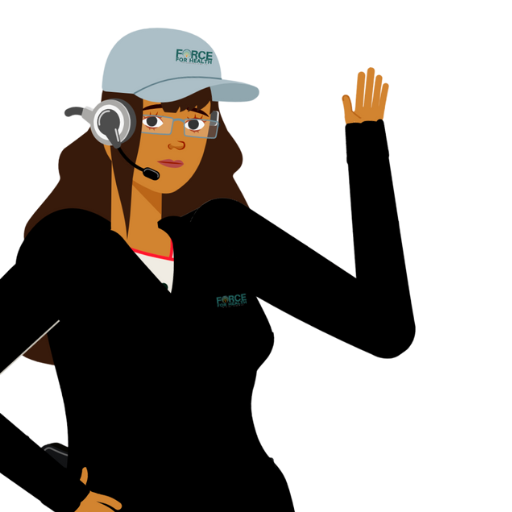
Coach LucyWellness coaching — meet you where you are, every Live It & Share It step.
Three quiet superpowers that smart, kind, successful people use every single day. Come find out what they are.
▶ Start the LessonBefore we start, let me tell you the single idea hiding underneath everything in this lesson, so you do not miss it.
Taking a risk and being willing to be wrong is the very same muscle as being willing to listen to someone who sees the world differently than you do. Both of them begin in exactly the same place. Humility. The quiet, honest admission that says, "I do not have the whole map yet."
Watch how this works. When you make a mistake, you just learned that the world is bigger than your first guess. That crack of humility is what lets a better idea walk in. And when you truly listen to a person whose life is nothing like yours, you learn the exact same thing. The world is bigger than your first guess, and a new idea you could not see before just walked in.
Keep that thread in your hand as you read. Now, let us go make a mistake.
I mean it. I am inviting you, warmly and on purpose, to go make a mistake today.
Now that probably sounds a little strange coming from a doctor. We are supposed to be the careful ones. But here is something I have learned in a long career of medicine, of disaster response, and of raising five daughters: a mistake is almost never the end of the story. Very often, it is the beginning of one.
Think about what a mistake actually tells the world about you. It says you tried. It says you stretched past what was easy. It says you were willing to learn, maybe to read more, study more, find a mentor, do your own research, and learn how to weigh somebody else's research too. Those are not the habits of a careless person. Those are the habits of a curious one.
I will be honest with you. I respect people who make mistakes, because I know what it took for them to step up to the edge of something hard. The people who never make mistakes are very often the people who never try anything new.
You have probably heard the story of Thomas Edison and the electric light bulb. The popular version says he failed a thousand times, or even ten thousand times, before he got it right. By October of 1879, his team finally had a bulb with a carbonized cotton thread filament that glowed for somewhere around thirteen to fifteen hours. Then they kept going and switched to a carbonized bamboo filament that lasted far longer.
Here is the question I want to leave with you. Were those tries really failures? Or were they steps on the road to one of the most important inventions in human history? I think they were steps. I think every single "that did not work" was a paving stone under Edison's feet.
Sometimes a mistake does not just teach you a lesson. Sometimes the mistake itself becomes the invention.
Look around. There is a very good chance you can spot a little square of sticky paper somewhere nearby. A Post-it Note. That cheerful, everyday, peel-it-and-stick-it square exists because of a mistake, and I love this story.
Back in 1968, a scientist at the 3M company named Dr. Spencer Silver was trying to invent a super strong glue, the kind that could hold heavy things together. He failed. What he made instead was a strange, weak adhesive. It stuck lightly, then peeled off clean, then stuck again. By the rules of his project, that was a flop. A strong glue that was not strong.
Now here is the part that ties our whole lesson together. The breakthrough did not come from Silver alone. It came when a different person, with a different everyday life, looked at the same glue. A colleague named Art Fry sang in his church choir, and he kept losing his place because the paper bookmarks in his hymnal kept sliding out. One day he remembered Silver's "failed" sticky stuff and thought, what if my bookmark could stick gently and peel off clean?
That was it. The mistake plus a second pair of eyes equaled the Post-it Note. It still took years, a lukewarm first launch under a different name, and a bold free sample giveaway in Boise, Idaho before it took off as we know it today. Patience, again. But the seed was a so-called failure that a curious community refused to throw away.
Here is the third superpower, and honestly it might be the most important one. The people you can learn the most from are very often the people who did not grow up the way you did.
Let me tell you a small, true-to-life story. Imagine your car will not start, and you need to get to school. You stand on your porch and you feel stuck. You can see your house, you can see the school across town, and you can see your dead car in the driveway. Your brain runs through everything you know: call a tow truck, which costs money you do not have, or start walking, which would take two hours.
So you call a friend from school for help with the car. And your friend, who grew up taking the city bus everywhere, says the most ordinary thing in the world to them: "Why don't you just take the bus? There's a stop right on your corner."
And you blink. Because in your whole life, you have never once had to take a bus. That corner has been a blind spot for you. The answer was thirty feet away the entire time, and you literally could not see it, because it was never part of your world. Your friend's everyday life was your missing puzzle piece.
Here is your map. Part of it is dark, the same way the bus option was dark to you. Tap the button to ask a friend who sees what you cannot.
Now do not miss the second half of this, because it matters just as much. A few weeks later, that same friend is stuck on something you happen to know cold, maybe a science project or fixing a bike, and now you are the one who lights up their blind spot. The value runs both directions. You bring something to them, and they bring something to you. That is what real respect between different people looks like.
Pull it all together and you have three habits you can start using today. They work in school, in a job, in a family, and in a whole community. And remember the thread from the very start: these are not three separate tricks. They are three ways of doing one brave thing, staying open. Open to being wrong, open to a surprise, open to a person who is not like you. That openness is the whole engine of new ideas.
Try the hard thing. Treat each "no" as a step, not a stop. Comebacks, not streaks.
When something goes sideways, ask what it might secretly be good for. Do not throw it away too fast.
Find people unlike you. Learn what they see. Offer what you see. Build something better together.
Reading is good. Doing is better. We built three short, interactive micro-modules so you can feel each idea in your own hands. Each one earns Health Coins, and the last one has the blind spot game where a friend literally lights up the answer you cannot see.
Note on numbers: popular "1,000 times" and "10,000 times" figures for Edison are widely repeated but not precisely documented. We present them as motivational legend, not exact history.
This is an educational character and career-readiness lesson from The Force for Health Network. It is not medical advice. Learn It. Live It. Share It.