 MISSION HANDBOOK · 2026
 A program of The Force for Health® Network
in Training™
The Mission Handbook · Group Leader & Trainer Edition
 Pre-flight
How to read this handbook
You already live on a spaceship. This book is your training manual for flying it well.
Marstronaut™ in Training™ uses a mission to Mars as the through-line for something every trainee needs right now on Earth: health literacy, science and math, real careers, teamwork, and character. Every single thing learned for Mars has an immediate Earth application.
The handbook follows the same path a trainee walks on the platform — from Orientation through Ground School, Flight School, three Missions, and Graduation. Each chapter ends with two boxes:
Every chapter also carries an Open the tool link. Tap it on a screen and the live Marstronaut page opens — this handbook is a guide to a working program, not a brochure about one.
Marstronaut™ delivers standards-aligned enrichment challenges. It runs alongside what a school, club, or family already does; it does not replace it. Sponsors fund seats, never content.
Mission handbookContents
Tabs on the right edge of every page jump to a section. The Field Manual edition carries the full content, badge cards, worksheets and QR codes.

You already live on a spaceship
“You already live on a spaceship. It's called Earth, it's flying through space, and that makes every one of us crew on the same mission. The question isn't whether you're on a mission — it's whether you're training to be the kind of crew this one deserves: fit, kind, informed, and ready to lead.”
— Coach Lucy
Orientation is a trainee's first day on campus. The core idea lands in the first minute: humanity is a crew on a lifeboat through space, and training is how you become the crew this mission deserves.
The challenge is scoped in seven rings — Self · Family · Friends · Community · World · Ecosystem · Planet. Mission-ready starts with your own body and reaches all the way out.
What a trainee earns: badges and certificates aligned to ten standards frameworks, lifelong skills in health, STEM, leadership and civics — and eligibility for real-world experiences, including enrollment for a trip to an actual rocket launch.
Finish the four first steps: watch the Welcome video, meet your crew, take your Career Compass, enter Ground School. Then create your Training ID — every astronaut has a call sign.
Open every session with the compass question: “What have I done today to make the world — or someone's world — a bit better than if I weren't here?” Ask it at the start and again at the end.
Meet your crew
“Hi, I'm Maria, and I'll be with you every step. The moment you have an ID and a crew, you stop watching the mission and start being in it.”
— Maria
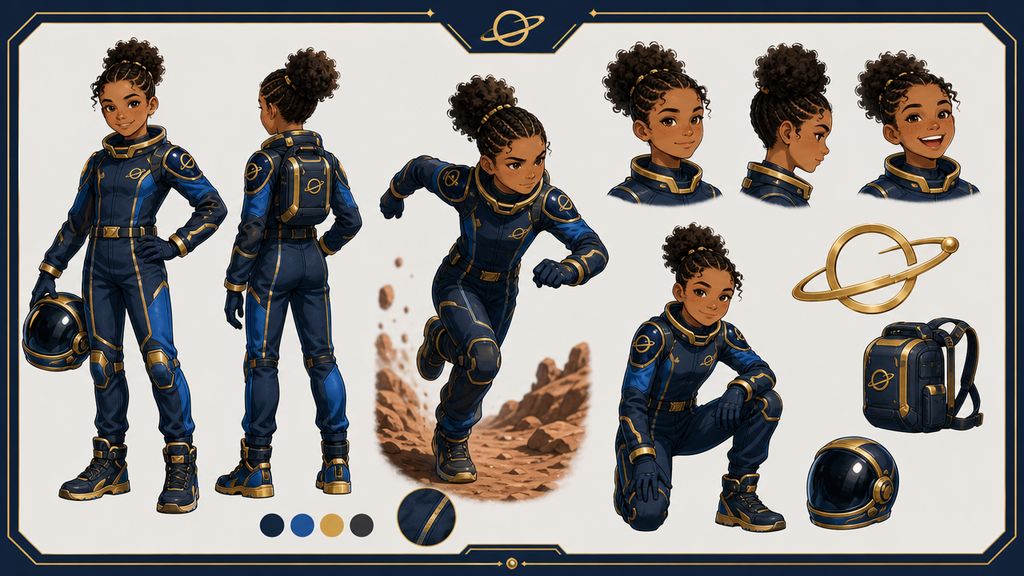
Nobody trains alone. Two illustrated trainee companions walk beside every learner, and six expert guides are on call.
All AI guides are clearly labeled as AI. Clinical questions route to Dr. Rob. Crisis indicators trigger emergency resources (911 · 988 · 741741).
Pick the guide you'd ask first when you're stuck — then notice, over the program, how that changes.
Maria and Marcus model the emotional journey on purpose: one is STEM-anxious, one is humanities-anxious. Use them to normalize “I'm not sure yet” in your group.
Learn It · Live It · Share It™
“Learn It · Live It · Share It is not a tagline; it's a way of life. Students don't just learn about health and science — they practice it, and then they teach it to others.”
— Dr. Rob
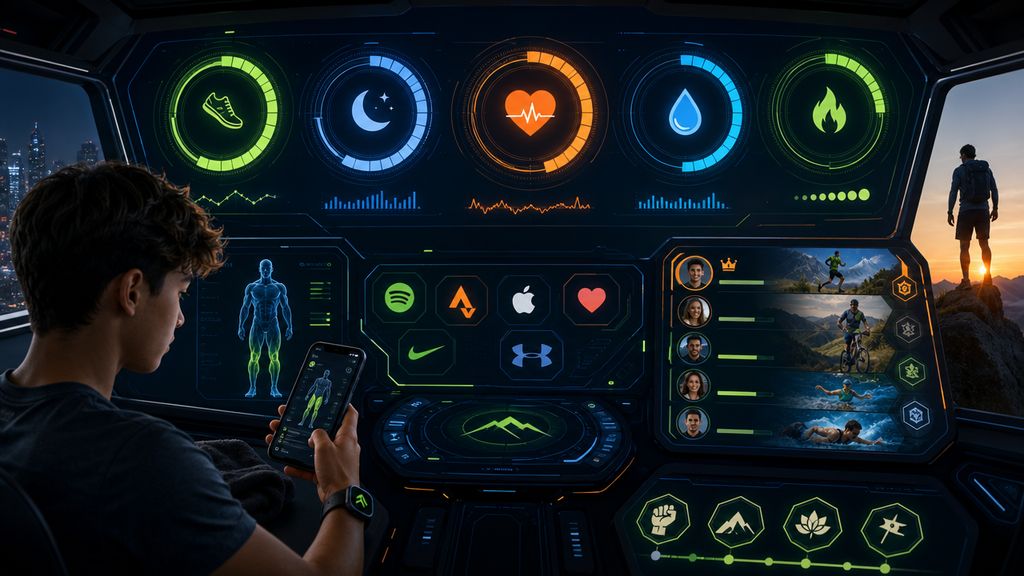
Every card, bingo square, and mission event in Marstronaut runs on the same three beats, and each beat pays in a different currency.
A Drop is a tear prevented — a life made a little better. Coins buy rocket systems; Drops buy crew and training components. And knowledge always gates spending: 2,000 coins and no Chemistry Badge still won't build a propulsion system.
The LIVE It Trackers hold eleven everyday-health trackers — workouts, nutrition, weight, BMI, sleep, screen time, challenges, pain, treatment, reactions, and Serve It — because on Earth your body is the only spacecraft you'll ever be issued.
Real astronauts train 2.5 hours a day in orbit just to hold onto muscle and bone. Start where you are — log one workout and one night of sleep this week.
Award Drops for physical activity, service, or demonstrated skill outside the simulation. The teacher console lets you grant badges directly — use it to recognize what the software can't see.

Find your Career Compass
“Every BODY has a role to play. Let's find yours.”
— Coach Lucy
A thirteen-question intake maps a trainee's interests onto an eight-point radar and names a Top 3. It takes about ten minutes, has no wrong answers, and travels with the trainee through every phase.
The Compass also captures an IDEAS seed — one community concern the trainee cares about — and holds it until the first IDEAS project in Ground School.
Retake the Compass at the end of each phase. Most Marstronauts discover new interests as they learn. It's a tool for exploration, not a label.
Pull the group's Top-3 distribution before Career Training. Careers matching each trainee's affinities are highlighted in the Career Ambassador — plan your guest speakers around the clusters you see.
Five phases, five rows, twenty-five cards
“Think of it as your Gemini program — the bridge where skills get real.”
— Marcus
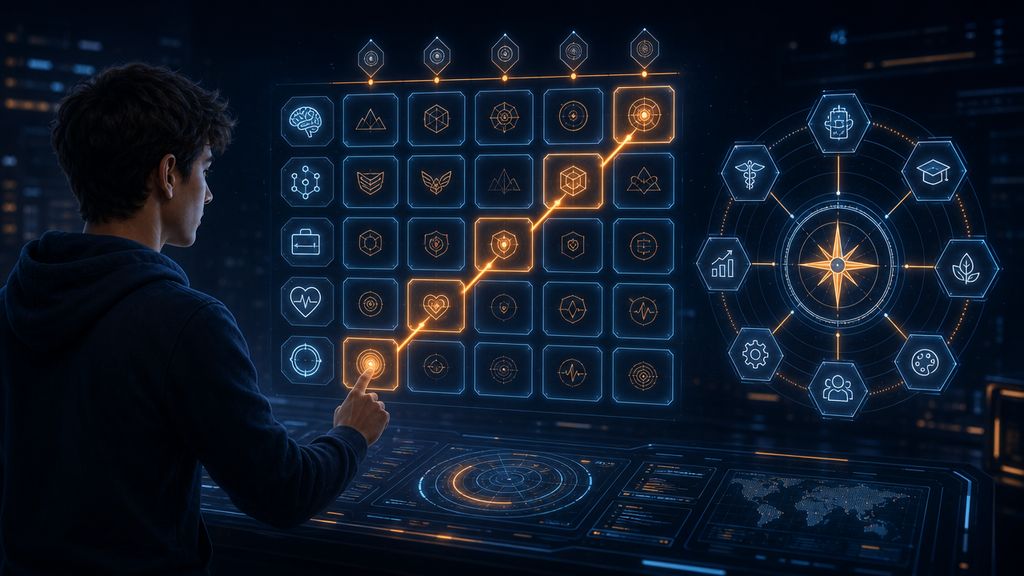
The whole program fits on one board. Five phase columns run left to right; five rows run down each column. Every square is a card with its own Learn It · Live It · Share It, and the bottom row of each column is a simulation gate — you prove readiness before the next column unlocks.
| Ground School | Flight School | Build the Rocket | The Journey | Survive on Mars | |
|---|---|---|---|---|---|
| Concepts | Body = Spacecraft | Space Physics | Rocket Engineering | Transit Science | Mars Environment |
| Skills | Health Skills | 16 Systems | Systems Integration | Crew Systems | Habitat Systems |
| Careers | Career Compass | Career Spectrum | Launch Team | Mission Ops | Colony Ops |
| One Health + Humanities | Humanities | Innovation | Eng for Everyone | Human Factor | Earth Return |
| Simulation Gate | Jeopardy + Crisis | Navigation Crisis | Launch Control | Deep Space | Colony Crisis |
You can explore any square, but cards unlock in sequence — the gate at the bottom of a column is the only door to the next one.
Use the board as your pacing chart. One column is roughly a unit; one row across all five columns is a thread (for example, follow the Careers row for a career-week).

Badges & microcredentials
“Badges are not participation trophies. You cannot buy your way past a badge.”
— Dr. Rob
17 knowledge badges
Program microcredentials
Ground School Graduate + 12 micro-badges · Astronaut ID + EVA Certificate · Flight School Wings · Launch Clearance · Transit Complete · Marstronaut · Cultural Competency · Mission Specialist · Certificate of Completion.
Badges accumulate and are never lost.
Full badge cards — earn by, unlocks, Earth use — are in the Field Manual edition.
Ground School — Are you ready?
“No astronaut launches before mastering the basics — you earn your readiness, you don't assume it. Watch ‘I'm not sure’ turn into ‘I've got this.’”
— Maria
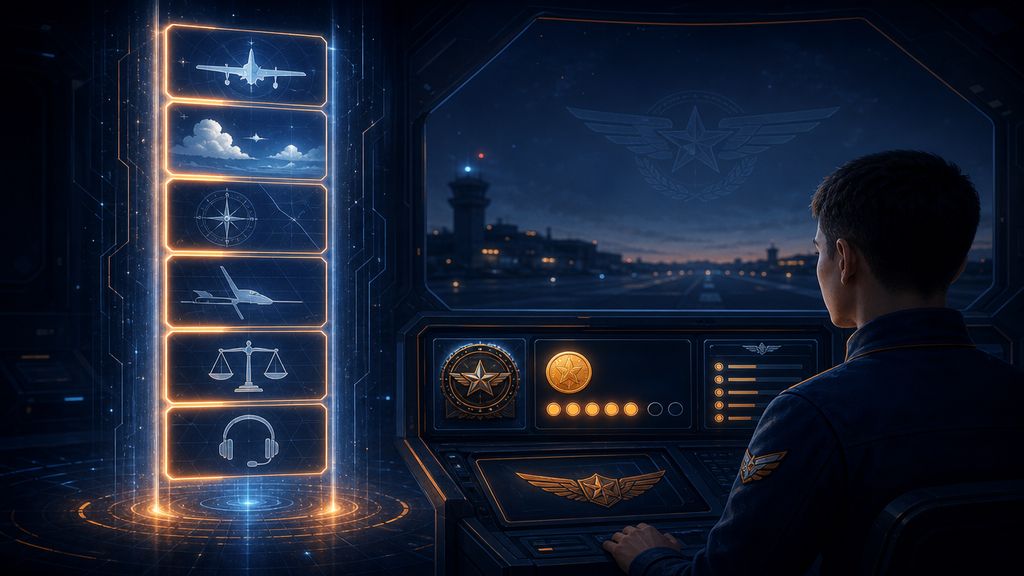
Column One, where every Marstronaut begins. Ground School builds the foundation: health literacy, your own body systems, mission math, careers, and the One Health idea that connects you to everything around you.
Five interactive cards (GS-01 → GS-05) unlock in order, ending at Sim A1 — the Ground School Gate: a Jeopardy-style round plus a health-crisis scenario that proves you're set for Flight School.
Two companion units sit here too. Maria — Forces That Shape Everything turns a hula hoop, a merry-go-round and an orbit into one physics lesson; Sports & Rides — Your Body Is a Physics Lab does the same with a roller coaster and a basketball.
BASICS Bingo is the health-readiness board: sixteen missions across nutrition, fitness, sleep, mental health, first aid and more.
Fill your Mission Log as you go. Six cards, each with a Learn It, a Live It and a Share It — the Share It is where the coins turn into Drops.
Ground School is the safest place to build the habit of the daily 60-second Quality. Start every session there before opening the card of the day.
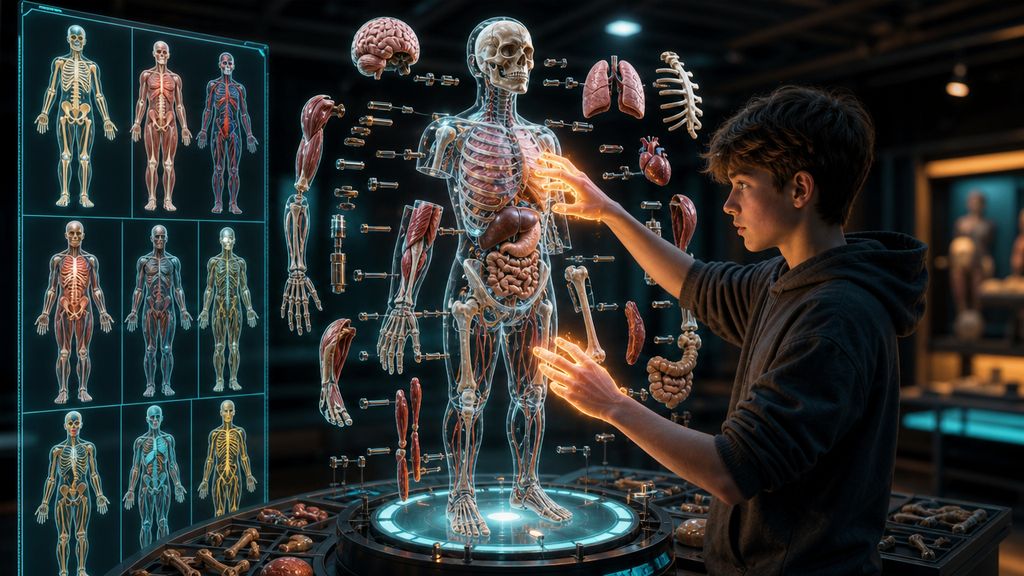
Twelve systems — suit me up
“Your body is a spacecraft with twelve systems. Learn what each one does, and you'll know how to keep it flying.”
— Dr. Rob
The Vehicle Assembly Building is where a trainee builds the body system by system — twelve EVA-style systems, each with a Dr. Rob video, a Learn It, a Live It, and a Share It. Completing the set unlocks the 360° Explorer and earns the Astronaut ID + EVA certificate.
Spacesuit Bingo runs the same twelve systems as a board game, and the goniometer range-of-motion fitting lab makes the biology physical: measure your own joints the way suit technicians measure an astronaut's.
🎵 Phase theme: “Twelve Systems (Suit Me Up)”
Generate your Astronaut ID when the twelfth system is green. Screenshot it — it's the first credential of the program.
This is the highest-yield health-education block in the program. If you only have two sessions with a group, run Orientation and the Vehicle Assembly Building.

Flight School — earn your wings
“Mercury got us off the ground, but Gemini taught the hard skills that made the Moon possible. Newton's laws, orbital mechanics, the Hohmann highway to Mars — it all clicks here.”
— Marcus
Five cards (FS-01 → FS-05) with Pause & Reflect eras and a gate at the end: Sim A2 — Navigation Crisis. Pass it and Mission 1 unlocks.
Flight School's toolkit is the deepest in the program:
- Flight Simulator — four eras of flight physics: balloon, propeller, jet, rocket.
- Instrumentation Bingo — sixteen spacecraft systems (IMU, RCS, ECLSS, GN&C, EVA, TPS…).
- History of Flight Bingo — sixteen pioneers with collectible trading cards.
- Critical Thinking Trainer — four lenses and a SMART reality test.
- Adapt, Improvise, Overcome — a resilience simulator.
- Interview Coach — STAR-method practice for the first real job interview.
- Leave It Better — a stewardship tracker.
🎵 Phase theme: “Thrust, Lift, Drag”
Try the Flight Simulator's experiment claims — make a prediction, fly it, see if you were right. That's the scientific method in ninety seconds.
Pair the Interview Coach with Career Training. A mock interview for a real health or aerospace role is a natural Share It artifact for the group.

Sixty careers — find your seat
“These aren't pretend jobs — they have real training steps, real salaries, and real first patients. Learn these pathways now, and the day someone needs you — on this planet or another — you'll already know how to step up.”
— Dr. Rob
Every astronaut is carried by a crowd of people who never leave the ground. Career Training introduces them.
Career Ambassador — ten real careers with Dr. Rob videos and honest Q&A; careers matching your Compass Top 3 are highlighted. Pre-Apprentice Healthcare Pathway — sixteen actual entry careers (CNA, EMT, phlebotomy tech, medical assistant and more) with hands-on missions.
Three bingo boards round it out: Health Careers for Mars (12 career videos), STEM Careers for Mars (“Top 10 careers that will get us to Mars”) and Self-Reliance Skills (wound care, burns, fractures, psychological first aid, BLS — medicine when there is no 911).
🎵 Phase theme: “Sixty Careers (Find Your Seat)”
Log three careers you'd never heard of before this week. Most students can name five careers; you're on your way to sixty.
The AMBASSADORS Career Bingo ships with lesson plans and a Teacher's Guide. Local employers and health systems make ideal Group Leader guests here — this is where sponsors see their seats at work.

Build the Rocket
“A rocket is just a very honest team: if one system fails, none of them fly. This is where knowledge becomes something that actually leaves the ground.”
— Marcus
In the Vehicle Assembly Building the trainee assembles eight rocket systems. Each needs a knowledge badge first — and each badge has an Earth job attached.
| System | Badge required | Earth application |
|---|---|---|
| Propulsion | Chemistry | Engines, energy systems |
| Navigation | Math & Calculus | GPS, forecasting, data science |
| Life Support | Biology | Clean air & water → community health |
| Crew Selection | Civics | Team building anywhere |
| Physical Training | Health & Body | Heart disease, osteoporosis prevention |
| Psychology | Psychology | Teamwork, mental health, communication |
| Mission Planning | Math | Project management, budgeting |
| Structure | Engineering | Architecture, materials, infrastructure |
Launch gate: 500 Coins · 300 Drops · Physics, Engineering, Health & Body badges → clearance at Sim A3 — Launch Control.
The Rocket Assembly Builder walks the six-stage Artemis SLS stack with flashcards and a launch-sequence reward. Build it once for fun, then once for the badge.
Suggested pacing: 3–4 class periods. Badge-earning can happen as homework or inside lessons you already teach — Physics, Chemistry and Biology badges map straight onto existing units.

The Journey — 32 weeks to Mars
“Surviving the trip isn't just engineering, it's teamwork and patience, and the crew that communicates wins. Strap in, Marstronaut. Mars is seven months away.”
— Marcus
Thirty-two virtual weeks of transit. Supplies deplete, events fire, and every event demands a two-level decision — fix the problem on the ship, then write the lesson home.
Every resolved event generates an Earth Dispatch — the Share It moment, and a ready-made formative writing piece.
Unlock gate: 800 Healthy Coins · all 8 systems built · First Aid and Psychology badges.
Your Earth Dispatch is read by someone on Earth — write it like it matters. What would you want your family to know after a solar storm?
Suggested pacing: 5–6 periods, one or two virtual weeks per session. You can trigger any crisis manually as a whole-class prompt, and you review and approve every Dispatch.

Survive on Mars
“Survival isn't just engineering — it's caring for people and place at the same time, the hardest and most human skill there is. Pass this, and you've earned the name Marstronaut.”
— Dr. Rob
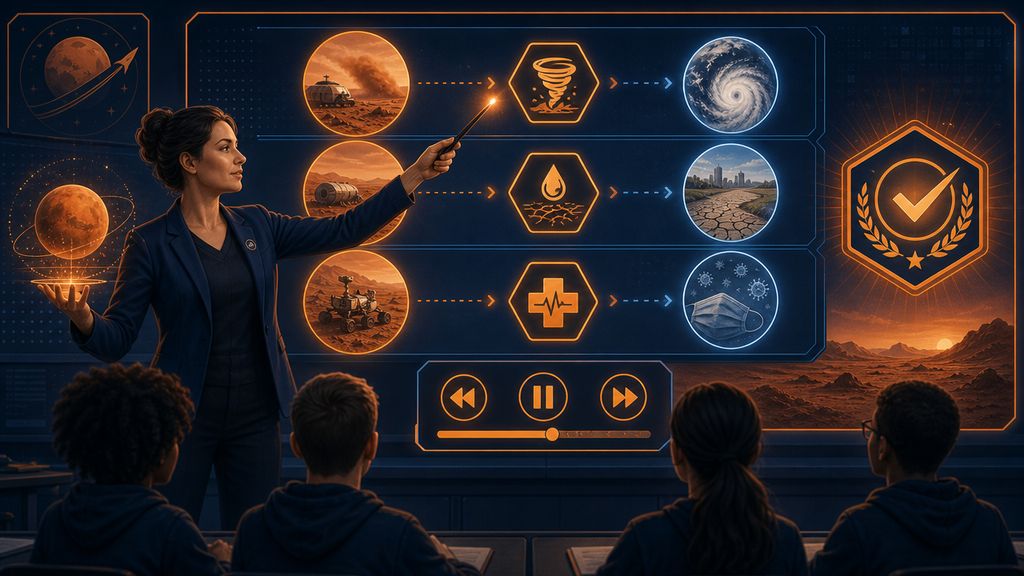
The ultimate One Health test: keep bodies, a crew, and a whole habitat alive together on a planet that is trying to stop you. Three colony build levels, consumable supplies, medical emergencies — and community stress scenarios that every classroom already knows:
Everything built on Mars comes back to help Earth: water conserved, energy budgeted, food not wasted. Unlock gate: 900 Drops · 3+ Earth Dispatches · Biology and Civics badges. Final gate: Sim A5 — Colony Crisis.
🎵 Phase theme: “Mission Control (Reach the Red)”
The Mars Colony Builder game lets you run the colony free-play. Watch what fails first — it's almost never the machinery.
Suggested pacing: 6–8 periods, one Sol per session. After community events ask: “Have you ever seen this happen in real life? What happened?”
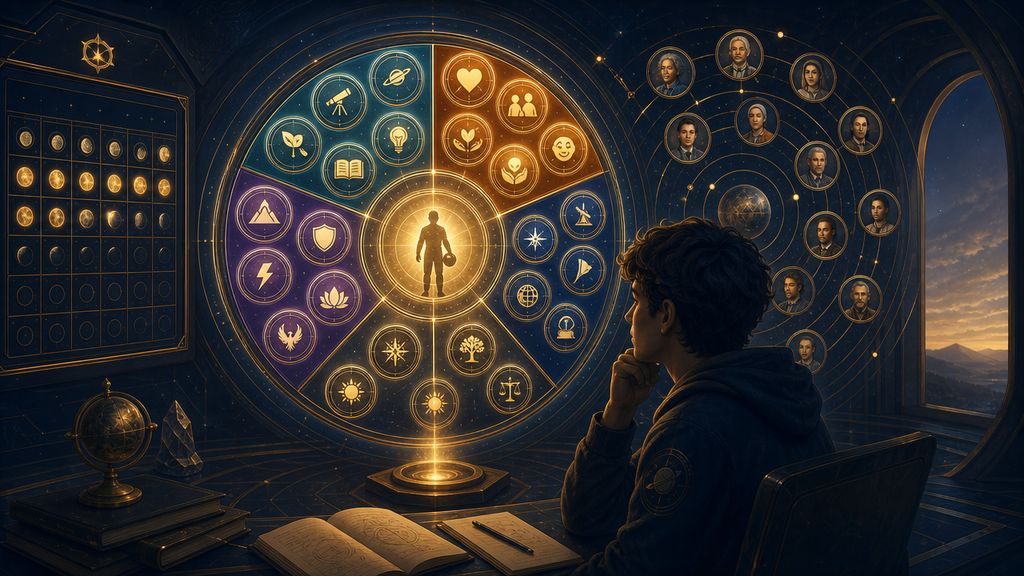
The 26 Astronaut Qualities
“The daily sixty-second habit builds an astronaut one quality at a time.”
— Coach Lucy
NASA selects for more than test scores. Marstronaut trains the twenty-six human qualities real astronauts are chosen for — scientific curiosity, collaboration under pressure, physical and psychological resilience, systems thinking, empathy, environmental stewardship, communication, ethical reasoning, health advocacy, creative expression, and more — each illustrated by real people who embody it.
The Daily Quality is a 60-second opt-in: read today's quote, see today's tip, take today's action. It pays an artifact for your Mission Log, ⚙️ 10 Healthy Coins, and 💧 5 Drops for sharing.
The 26 Qualities Explorer shows the whole wheel; the Qualities Manager lets a Group Leader schedule the feed for a cohort.
Pick one quality a week to work on deliberately. Twenty-six weeks later you have a half-year of character training in your Log.
This is the SEL spine of the program and the easiest win with a new group — sixty seconds at the top of every meeting. Schedule the feed for your cohort in the Qualities Manager.

Faith, Culture & Health
“The crew will pray differently, eat differently, and grieve differently. The competency isn't knowing every rule. It's knowing to ask.”
— Chaplain Rev. Tanya Mitchell
A Mars crew, like any clinic or classroom on Earth, carries many faiths and worldviews. Fifteen Dr. Rob lessons open each through the health lens — what it teaches, and one specific act of respect:
They live on the Faith, Culture & Health Bingo board — a 4×4 card with a One Health center square: kosher and halal meals, Ramadan and the Bahá'í fast, gelatin capsules and ahimsa, herbs that interact with prescriptions, sacred items never moved without permission. Cultural competency is the One Health skill for people. The Marstronaut rule holds on every square: ask, don't assume.
Start with the tradition you know least about. Teach one caregiver fact to someone this week.
Companion to the GS-04 Humanities card. Pair a square with the question: “What gives you strength and comfort?”

Games, bingo boards & simulations
“Sixty collectible cards, four rarity tiers, and a prize wheel. Learning should feel like winning.”
— Marcus
Marstronaut is a game first. Alongside the phase hubs, trainees can play:
Bingo boards
- BASICS · Spacesuit · Space
- Health Careers · STEM Careers
- Self-Reliance Skills · Ambassadors
- Faith, Culture & Health
- History of Flight · Instrumentation
Games
- Artemis Rocket Builder
- Mars Colony Builder
- Space History Gallery
- Category Quest
Simulation gates
- A1 Ground School · A2 Navigation
- A3 Launch Control · A4 Apollo 13
- A5 Colony Survival
Collect
- Card Collection — 60 cards
- Spin4Rewards wheel
Also: Mission Health Rescue, the free arcade Reality Health Game™ at theforce.health/marstronaut.
Every bingo square has a Learn It, Live It and Share It depth card behind it. The square is the door; the coins are behind it.
Bingo boards are your drop-in activity when a period runs short or a sub is covering. Each one stands alone and needs no setup.

Your ticker-tape parade
“Whether or not you ever go to Mars, you are already a Force for Health. Take your bow, Marstronaut. Then go make both worlds better.”
— Coach Lucy
When astronauts came home, New York threw shredded paper out of every window. John Glenn's parade in 1962 drew four million people. The Graduation Debrief is that parade for a trainee who has finished something most people never will.
The debrief prints the mission summary — phases completed, cards mastered, simulations survived, coins earned, Mission Log entries, days in training — and then says what the graduate now knows:
- You can explain how a rocket works — and build one.
- You can calculate orbital mechanics — and ask for help when stuck.
- You can manage a crew through 32 weeks of isolation.
- You can build and sustain a colony — water, power, food, and human conflict.
- You can identify 60+ real careers in space, health and STEM.
- You understand that your health is Earth's health.
🎵 Capstone theme: “Force for Health (Mission Complete)”
Graduates are eligible for the Ambassador tier — and Ambassadors can become Group Leaders who mentor the next cohort. The ladder is real.
Hold the debrief as an event. Invite families and sponsors; a graduate reading their own Earth Dispatch aloud is the best demonstration of the program there is.
Running a cohort
Marstronaut is built for grades 6–12 with a workforce extension, and it runs online or in person. A chapter is about 25 trainees and one Group Leader.
Suggested pacing
- Orientation + Compass — one session.
- Ground School — 3–5 sessions, one card per session, gate at the end.
- Flight School — 3–5 sessions plus the Navigation Crisis gate.
- Mission 1 — 3–4 periods. Mission 2 — 5–6 periods. Mission 3 — 6–8 periods.
- Daily Quality — sixty seconds, every session, no exceptions.
Group Leader powers
- Trigger any crisis event manually as a discussion prompt.
- Review and approve Earth Dispatches — the Share It writing assessment.
- Award badges for activity, service or demonstrated skills outside the simulation.
- See every trainee's progress, currency balance and active events at a glance in Mission Control.
Discussion prompts
After a Dispatch: “How would YOU apply this at school or at home?” · After a medical event: “Why does it matter to know first aid before an emergency?” · Every session: “What did you do today to make someone's world a little better?”
Badges & mission gates
Badges are the knowledge gate for every component and every crisis resolution. They are not participation trophies; each one is a defined body of knowledge or a demonstrated skill, earned through lessons, quizzes, activity logs and service verification. Badges accumulate and are never lost.
| Gate | Currency | Badges (minimum) | Unlocks |
|---|---|---|---|
| Mission 1 Launch | 500 Coins · 300 Drops | Physics, Engineering, Health & Body | VAB and 8 system cards |
| Mission 2 Depart | 800 Coins · all 8 systems | First Aid, Psychology + all M1 | 32-week transit |
| Mission 3 Land | 900 Drops · 3+ Dispatches | Biology, Civics + all M1 & M2 | Colony builder, 3 levels |
Seventeen badges span twelve discipline tracks at three proficiency levels. Five Mission-1 badges are STEM-focused and gate technical components paid in Coins; three are human-focused and gate crew components paid in Drops. Currency thresholds are minimums — more currency unlocks faster, but no one skips a badge.
Full detail: Badge & Mission Gating Reference and Educator Guide (Dr. Robert Gillio, March 2026), available from your Group Leader kit.
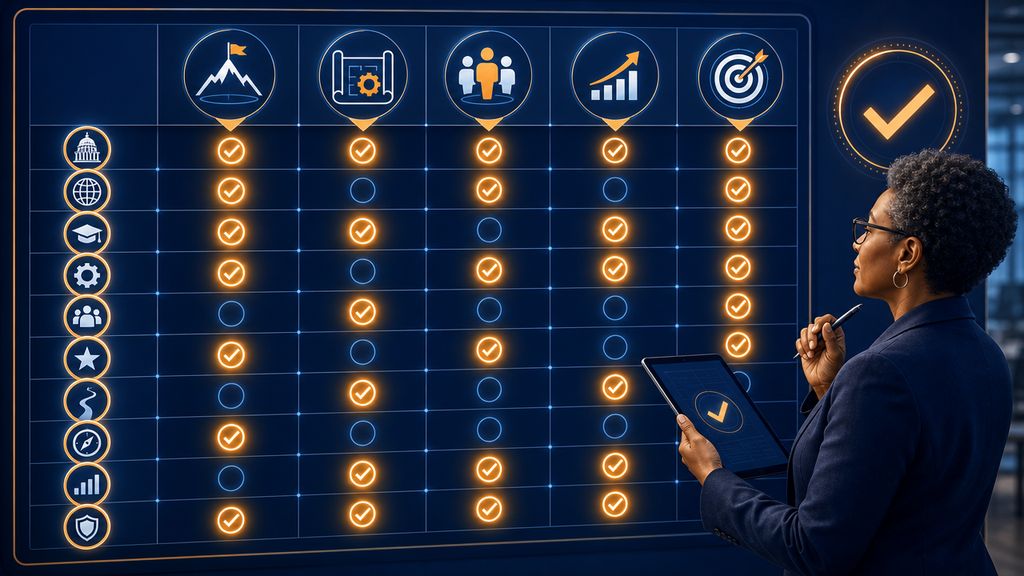
Aligned to ten frameworks
Every artifact in the program has been reviewed against ten national and state frameworks, so a CTE director, a health teacher, and a science department can each find their own standards in the same week of activity. Marstronaut is enrichment: it runs alongside adopted courses rather than replacing them.
One frame, ten subjects
A single mission narrative carries physiology, physics, math, ELA, SEL, civics and digital citizenship through the same week — without subject-switching whiplash. Science departments get NGSS life, physical and space science; math gets data analysis, ratios and resource management; health gets NHES and SHAPE; counselors get CASEL competencies and career development.
The full cross-walk lives in the Program Standards Map, with the companion Cross-Disciplinary Positioning brief for administrators.

Tool directory
All tools live at https://theforce.health/marstronaut/. Tap any name to open it.
Log entry
“Today I begin my training as a Marstronaut. What I hope to learn or become…”

How to start a chapter
“Every BODY has a role to play — and every community has a launch pad.”
— Coach Lucy
Trainees — no sign-up is needed to try the games. Create a free Training ID at the Welcome Center to start earning coins, Drops and badges that follow you through the program.
Schools, clubs and families — Marstronaut runs as a chapter of roughly 25 trainees with one Group Leader, online or in person, with Group Leader training built into the same ladder trainees climb (Basic → Ambassador → Group Leader).
Sponsors and partners — sponsors fund seats, never content. Scholarship seats are administered through The Force for Health® Network's 501(c)(3) fiscal agent, and chapter sponsorships can be met partly in-kind or through scholarships.
Recruit a fellow Marstronaut — the Welcome Center makes an invite card you can send. Crews are built one invitation at a time.
Bring this handbook and one live tool to your first pitch meeting. Ninety seconds in the Vehicle Assembly Building says more than any slide.
Notes & next steps
Who to call · what to bring · which tool to open first…
Chapter roster
One chapter ≈ 25 trainees and one Group Leader. Keep this sheet with the gate sign-offs; it is the paper record behind Mission Control.
| # | Trainee | Call sign | Training ID | Compass Top 3 | Ambassador |
|---|---|---|---|---|---|
| 1 | ☐ | ||||
| 2 | ☐ | ||||
| 3 | ☐ | ||||
| 4 | ☐ | ||||
| 5 | ☐ | ||||
| 6 | ☐ | ||||
| 7 | ☐ | ||||
| 8 | ☐ | ||||
| 9 | ☐ | ||||
| 10 | ☐ | ||||
| 11 | ☐ | ||||
| 12 | ☐ | ||||
| 13 | ☐ | ||||
| 14 | ☐ | ||||
| 15 | ☐ | ||||
| 16 | ☐ | ||||
| 17 | ☐ | ||||
| 18 | ☐ | ||||
| 19 | ☐ | ||||
| 20 | ☐ | ||||
| 21 | ☐ | ||||
| 22 | ☐ | ||||
| 23 | ☐ | ||||
| 24 | ☐ | ||||
| 25 | ☐ |
Ground School Gate
Run the gate as a live event — teams of four, one Group Leader as flight director. Initial each trainee who passes; record the date and any badge awarded outside the simulation.
| # | Trainee | Badges in hand | Gate passed | Date | GL initials |
|---|---|---|---|---|---|
| 1 | ☐ | ||||
| 2 | ☐ | ||||
| 3 | ☐ | ||||
| 4 | ☐ | ||||
| 5 | ☐ | ||||
| 6 | ☐ | ||||
| 7 | ☐ | ||||
| 8 | ☐ | ||||
| 9 | ☐ | ||||
| 10 | ☐ | ||||
| 11 | ☐ | ||||
| 12 | ☐ | ||||
| 13 | ☐ | ||||
| 14 | ☐ | ||||
| 15 | ☐ | ||||
| 16 | ☐ | ||||
| 17 | ☐ | ||||
| 18 | ☐ | ||||
| 19 | ☐ | ||||
| 20 | ☐ | ||||
| 21 | ☐ | ||||
| 22 | ☐ | ||||
| 23 | ☐ | ||||
| 24 | ☐ | ||||
| 25 | ☐ |
Flight School Gate
Run the gate as a live event — teams of four, one Group Leader as flight director. Initial each trainee who passes; record the date and any badge awarded outside the simulation.
| # | Trainee | Badges in hand | Gate passed | Date | GL initials |
|---|---|---|---|---|---|
| 1 | ☐ | ||||
| 2 | ☐ | ||||
| 3 | ☐ | ||||
| 4 | ☐ | ||||
| 5 | ☐ | ||||
| 6 | ☐ | ||||
| 7 | ☐ | ||||
| 8 | ☐ | ||||
| 9 | ☐ | ||||
| 10 | ☐ | ||||
| 11 | ☐ | ||||
| 12 | ☐ | ||||
| 13 | ☐ | ||||
| 14 | ☐ | ||||
| 15 | ☐ | ||||
| 16 | ☐ | ||||
| 17 | ☐ | ||||
| 18 | ☐ | ||||
| 19 | ☐ | ||||
| 20 | ☐ | ||||
| 21 | ☐ | ||||
| 22 | ☐ | ||||
| 23 | ☐ | ||||
| 24 | ☐ | ||||
| 25 | ☐ |
Mission 1 Gate
Run the gate as a live event — teams of four, one Group Leader as flight director. Initial each trainee who passes; record the date and any badge awarded outside the simulation.
| # | Trainee | Badges in hand | Gate passed | Date | GL initials |
|---|---|---|---|---|---|
| 1 | ☐ | ||||
| 2 | ☐ | ||||
| 3 | ☐ | ||||
| 4 | ☐ | ||||
| 5 | ☐ | ||||
| 6 | ☐ | ||||
| 7 | ☐ | ||||
| 8 | ☐ | ||||
| 9 | ☐ | ||||
| 10 | ☐ | ||||
| 11 | ☐ | ||||
| 12 | ☐ | ||||
| 13 | ☐ | ||||
| 14 | ☐ | ||||
| 15 | ☐ | ||||
| 16 | ☐ | ||||
| 17 | ☐ | ||||
| 18 | ☐ | ||||
| 19 | ☐ | ||||
| 20 | ☐ | ||||
| 21 | ☐ | ||||
| 22 | ☐ | ||||
| 23 | ☐ | ||||
| 24 | ☐ | ||||
| 25 | ☐ |
Mission 2 Gate
Run the gate as a live event — teams of four, one Group Leader as flight director. Initial each trainee who passes; record the date and any badge awarded outside the simulation.
| # | Trainee | Badges in hand | Gate passed | Date | GL initials |
|---|---|---|---|---|---|
| 1 | ☐ | ||||
| 2 | ☐ | ||||
| 3 | ☐ | ||||
| 4 | ☐ | ||||
| 5 | ☐ | ||||
| 6 | ☐ | ||||
| 7 | ☐ | ||||
| 8 | ☐ | ||||
| 9 | ☐ | ||||
| 10 | ☐ | ||||
| 11 | ☐ | ||||
| 12 | ☐ | ||||
| 13 | ☐ | ||||
| 14 | ☐ | ||||
| 15 | ☐ | ||||
| 16 | ☐ | ||||
| 17 | ☐ | ||||
| 18 | ☐ | ||||
| 19 | ☐ | ||||
| 20 | ☐ | ||||
| 21 | ☐ | ||||
| 22 | ☐ | ||||
| 23 | ☐ | ||||
| 24 | ☐ | ||||
| 25 | ☐ |
Mission 3 Gate
Run the gate as a live event — teams of four, one Group Leader as flight director. Initial each trainee who passes; record the date and any badge awarded outside the simulation.
| # | Trainee | Badges in hand | Gate passed | Date | GL initials |
|---|---|---|---|---|---|
| 1 | ☐ | ||||
| 2 | ☐ | ||||
| 3 | ☐ | ||||
| 4 | ☐ | ||||
| 5 | ☐ | ||||
| 6 | ☐ | ||||
| 7 | ☐ | ||||
| 8 | ☐ | ||||
| 9 | ☐ | ||||
| 10 | ☐ | ||||
| 11 | ☐ | ||||
| 12 | ☐ | ||||
| 13 | ☐ | ||||
| 14 | ☐ | ||||
| 15 | ☐ | ||||
| 16 | ☐ | ||||
| 17 | ☐ | ||||
| 18 | ☐ | ||||
| 19 | ☐ | ||||
| 20 | ☐ | ||||
| 21 | ☐ | ||||
| 22 | ☐ | ||||
| 23 | ☐ | ||||
| 24 | ☐ | ||||
| 25 | ☐ |
Badge award log
Knowledge badges are awarded in Mission Control when the trainee passes the lesson quiz — or here, by the Group Leader, for demonstrated skill or service outside the simulation. Log every award; badges are never lost.
| Badge | Track | Mission | Trainees awarded | Date(s) | Notes |
|---|---|---|---|---|---|
| Physics | Physical Science | M1 | |||
| Chemistry | Chemistry & Combustion | M1 | |||
| Engineering | Structural Engineering & Materials | M1 | |||
| Math & Calculus | Applied Mathematics | M1 | |||
| Biology | Life Science & Systems Biology | M1 | |||
| Civics & Leadership | Organizational Design & Civic Responsibility | M1 | |||
| Health & Body | Exercise Science & Human Physiology | M1 | |||
| Psychology | Human Psychology & Behavioral Science | M1 | |||
| First Aid | Emergency First Response | M2 | |||
| Nutrition | Applied Nutrition & Food Safety | M2 | |||
| Anatomy | Human Anatomy & Musculoskeletal System | M2 | |||
| Mental Health | Mental Health First Aid & Wellbeing | M2 | |||
| Communication | Interpersonal Communication & Conflict Resolution | M2 | |||
| Empathy | Social-Emotional Intelligence | M3 | |||
| Conflict Resolution | Mediation & Restorative Practice | M3 | |||
| Sustainability & Earth Systems | Environmental Science & Closed-Loop Systems | M3 | |||
| Community Health & SDOH | Public Health & Social Determinants of Health | M3 |
Notes
Two planets. One mission.
Your health is Earth's health.